AI Lab website: round 6, new ideas

Six working samples built from the current site’s content, each on one kind of idea other than image effects. Nothing here is live. Starred samples are Claude’s picks, and every link opens its page with motion switched on.

The ideas come from a sweep of 85 real references in nine tracks: type, pointer, year, explorable, provenance, live, diagrams, offer and wildcard.

The synthesis has 12 candidates; each sample below names the references it draws on.

Claude’s picks

Three judges scored the six samples. A sample is starred when at least two of them put it in their top three, best combined score first. Two samples qualify.

  1. U, Formula Bar (24 of 30, in all three top-three lists). The sheet is the offer: a manager sees the three workshops frozen at the top with an Ask link on every row and the email button always in view, and the “+” Shichao liked in J becomes the operator the sheet computes on the lab’s own titles.
  2. X, Crosshair Year (22 of 30, in all three top-three lists). J’s “+” becomes an instrument that reads the lab’s own 2026 and sets each locked title across the full width, the lab’s titles at poster size as in R, while the mission, the email button and the address stay on the first screen; the idea lives on the first screen, and the sections below it are conventional.

U and X both build on the “+” from round 1’s J, so a review with all three shows variations on one idea. Show X beside J, or let X stand in for J, and say that U uses the “+” as an operator and X uses it as a pointer.

V is the reserve if the review needs one sample where the visitor changes something and sees the result. Its question with three buttons risks the reaction the interest map got (“不明所以”), and Michael zur Muehlen must approve it first.

The judges’ scores, out of 10 each
SampleIdeaReaderCraftTotalIn the top three of
U, Formula Bar88824all three
X, Crosshair Year87722all three
V, In the Loop667.519.5craft
W, Show the Sources47718reader
Z, Open Index56617none
Y, Research Tree74516idea

U, V, X and Z were polished after scoring, each against a defect the judges measured. The scores are the judges’ from before the polish; each card’s “Fixed after judging” line says what changed.

Idea: idea and boldness, judged the way Shichao judges. Reader: a company manager finding the offer and the email within seconds, and the Lab Director finding the page credible and easy to keep up. Craft: motion and build quality, each page opened in real time in Chrome with mouse, keyboard, phone and reduced-motion passes.

The six samples

Each card shows four moments of the page’s one orchestrated moment, then one interaction, the phone’s first screen and the two references it borrows from.

  1. Sample U: Formula Bar

    Claude’s pickCandidate C11

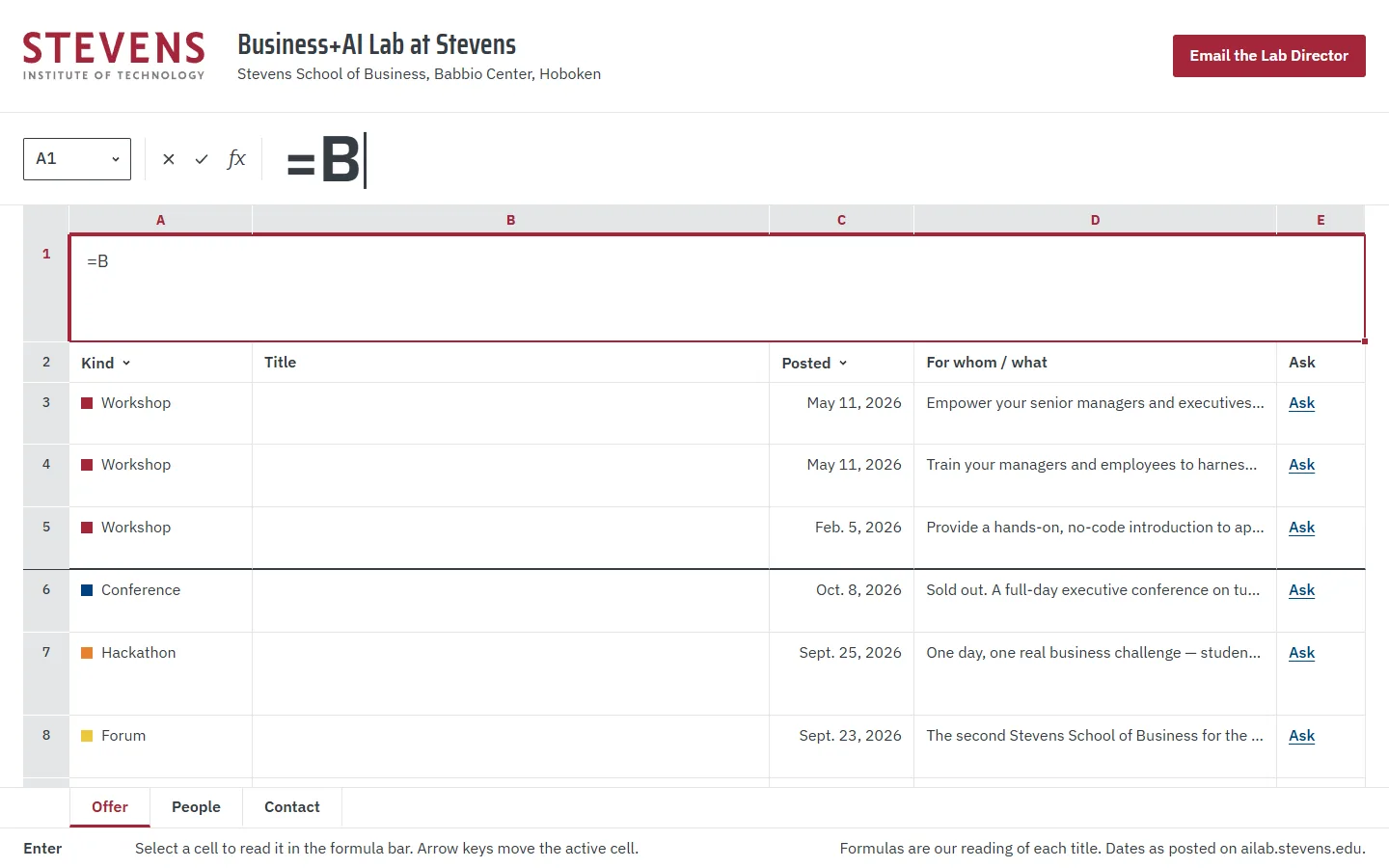
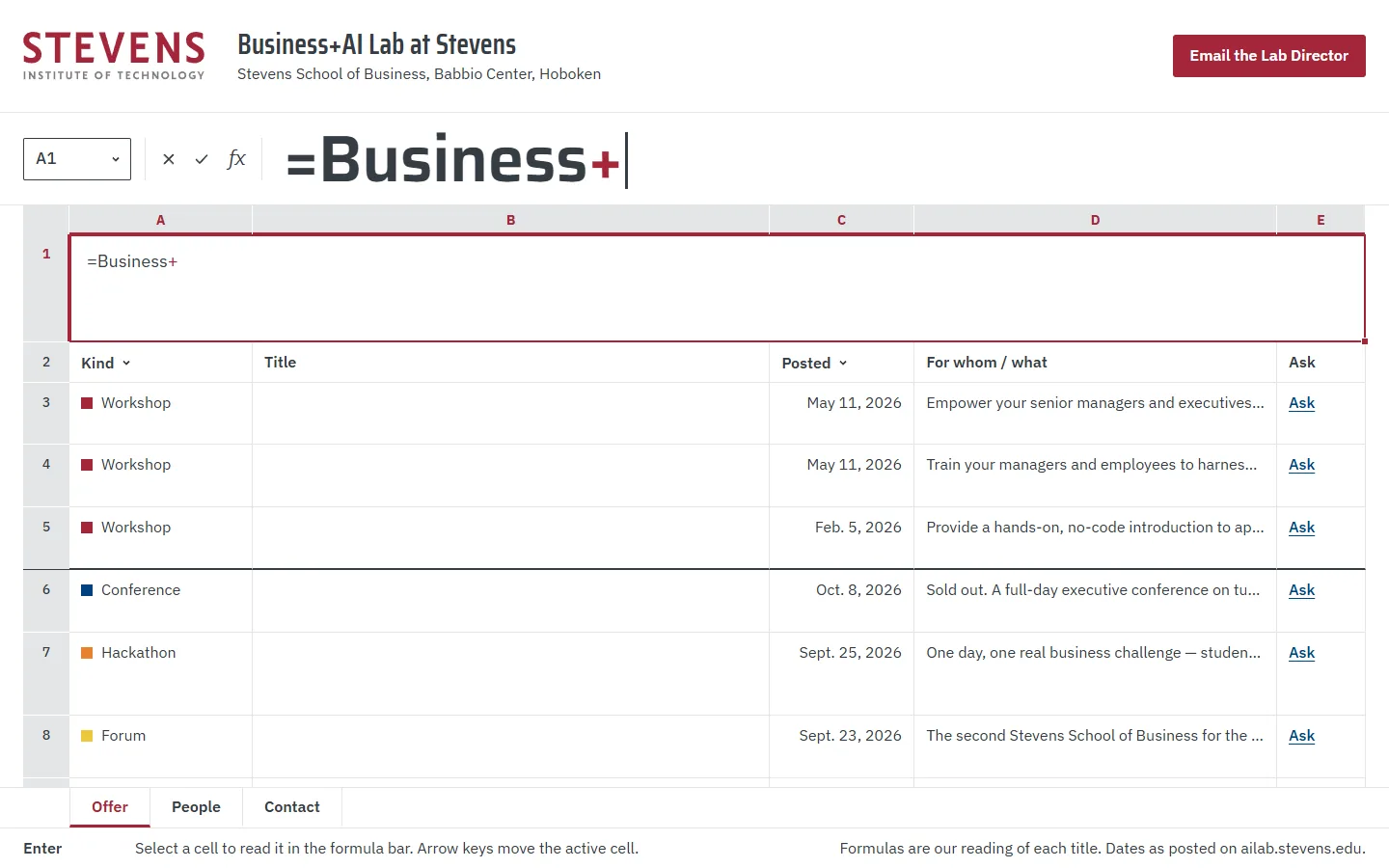
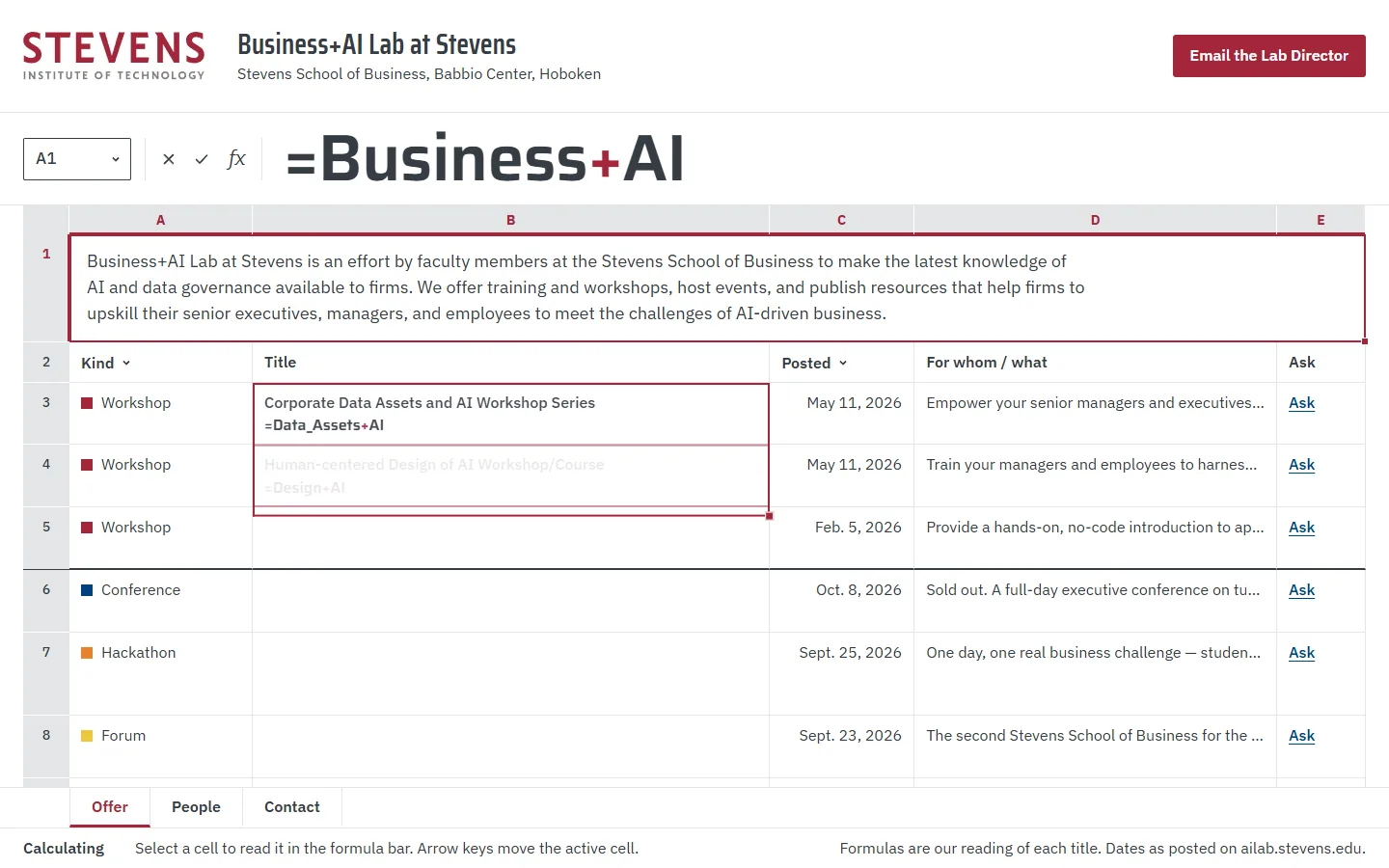
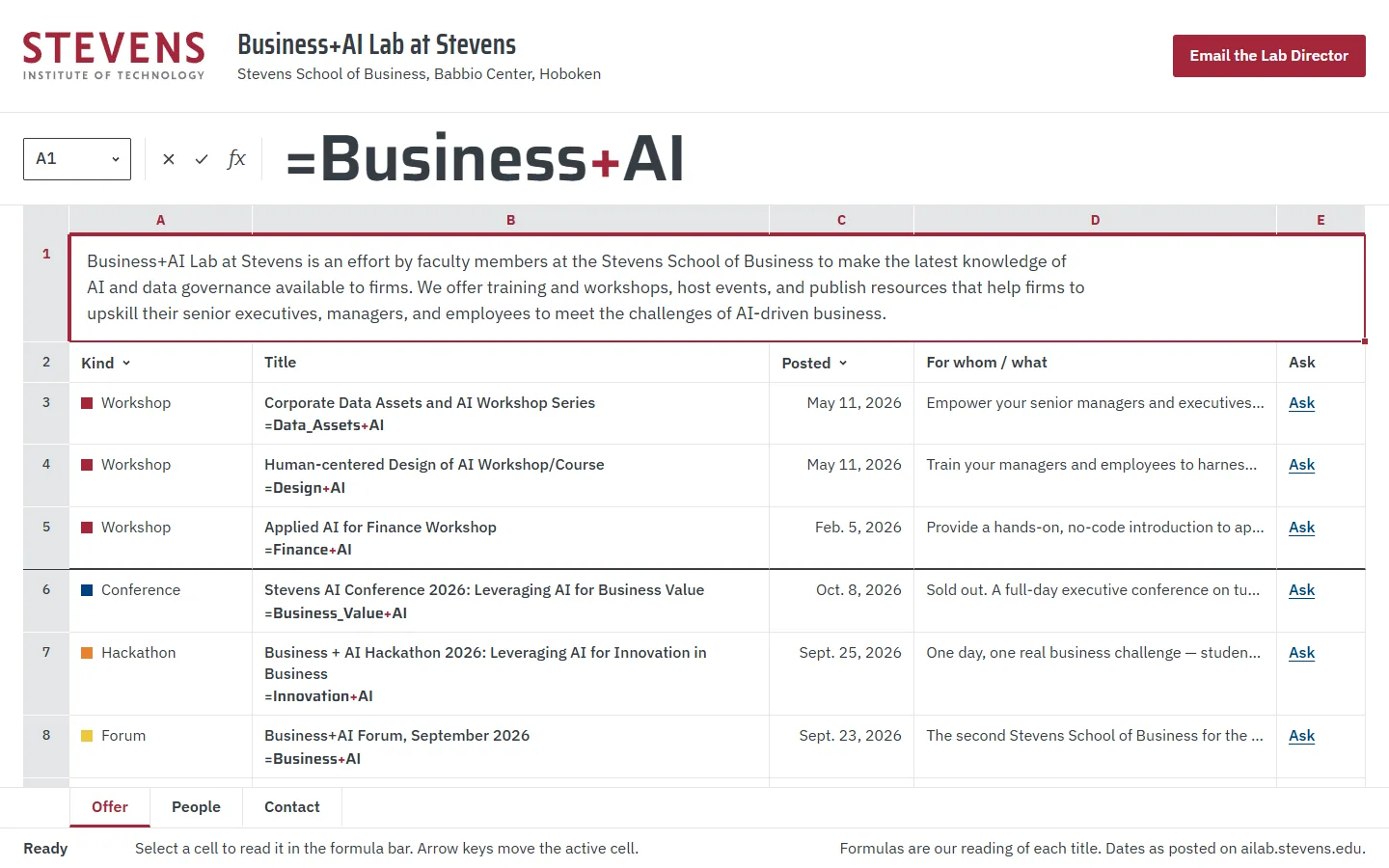
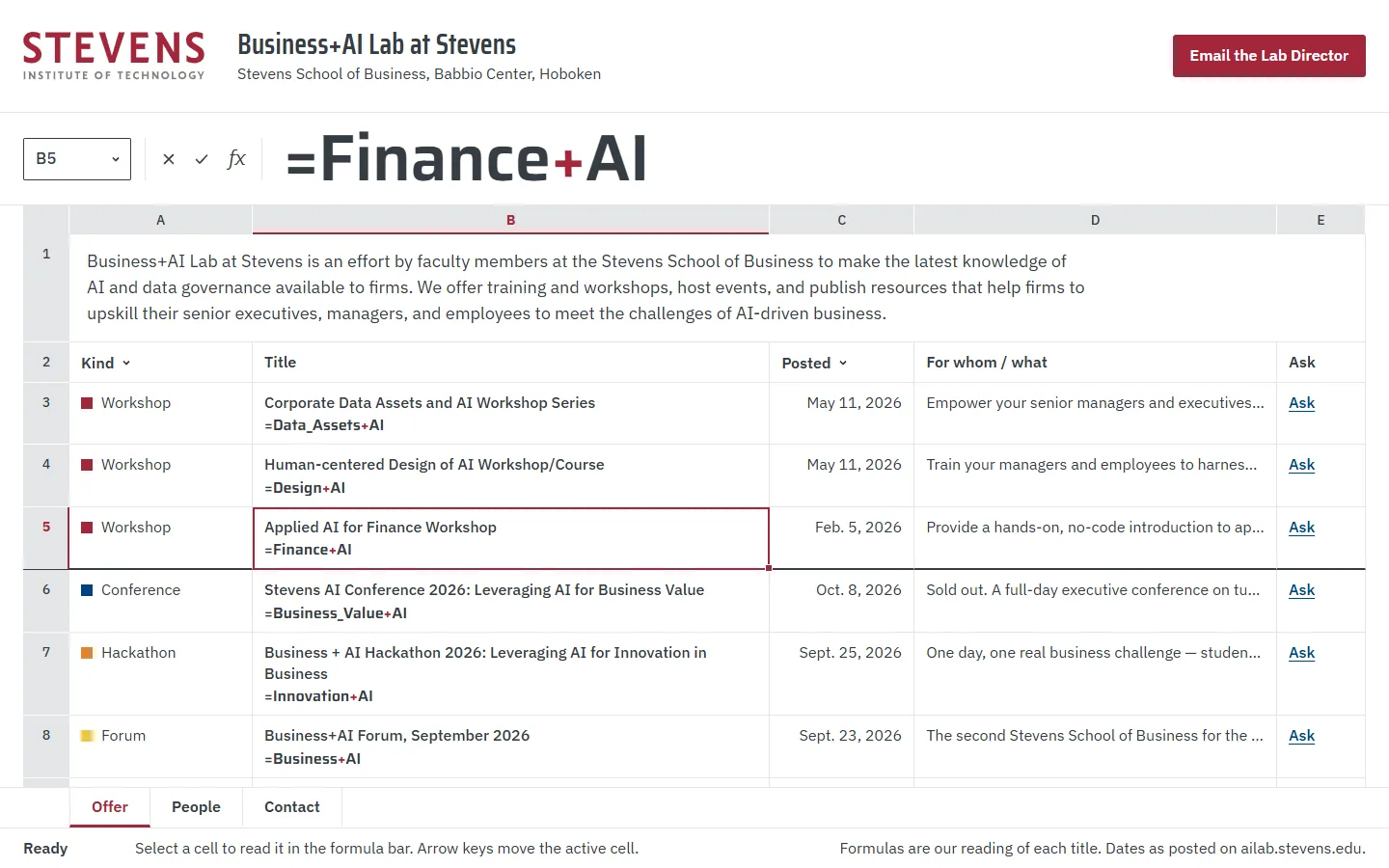
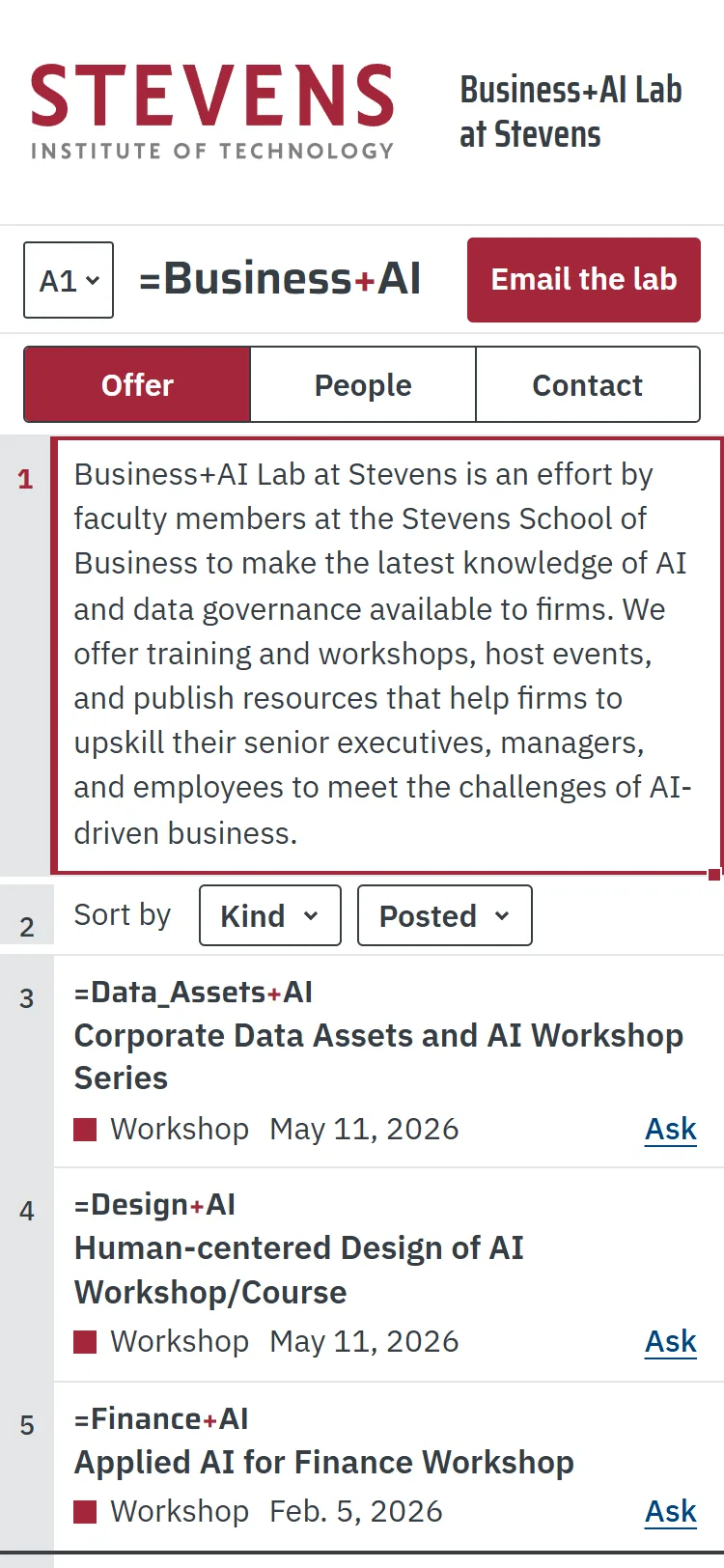
    The homepage is a spreadsheet, the tool every manager already works in. Its formula bar reads =Business+AI, the sheet lists all 18 things the lab offers or has run with the three workshops frozen at the top, and selecting an AI title shows our reading of it as a sum, such as =Finance+AI.

    1. Sample U on a laptop, moment 1: a spreadsheet whose formula bar reads =B, with the workshop rows still empty1=B types into the formula bar
    2. Sample U on a laptop, moment 2: =Business+ in the formula bar and in cell A12=Business+ in the bar and in A1
    3. Sample U on a laptop, moment 3: the mission fills A1 and the fill handle drags down the Title column inside a red recalculation outline3The fill handle drags down the titles
    4. Sample U on a laptop, moment 4: the sheet at rest, the mission in A1 and each AI title with its formula under it4At rest: each AI title with its formula
    5. Sample U on a laptop, interaction: the Applied AI for Finance Workshop selected, the name box reads B5 and the formula bar =Finance+AI5Select the finance workshop: =Finance+AI
    Sample U, first screen on a phone: the name box, =Business+AI and an Email the lab button, the Offer, People and Contact tabs, the mission cell and the three workshops with their formulas and Ask linksPhone, first screen

    Open the page for sample U, Formula Bar, with motion on

    Judges: idea 8, reader 8, craft 8; 24 of 30, in all three top-three lists.

    Before the review: let the typing and the fill drag play before clicking.

    Fixed after judging: an opened row now scrolls just enough to clear the sheet tabs and the formula bar, so its two buttons stay in view at every screen size measured.

    References

    • Beckmans College of Design, degree show 2024 lends a school’s whole site run as one spreadsheet, with row numbers, gridlines, one color swatch per group and rows that open in place.

    • Three Zero Five lends a small readout that says in plain words what is moving the page; here, the formula bar and the status bar.

    Also drawn on: Berkshire Hathaway’s plain dated record, which executives read as serious (ideas-wildcard-berkshire).

    Needs approval before any public use: the 13 formulas, which are our reading of the titles (Aleksi).

    Steps outside the Stevens brand: the red “+” sits inside dark type in every formula; Medium Gold marks the Forum rows (the brand gives it to the hackathon); links inside cells are Dark Blue; four typefaces on one page.
  2. Sample V: In the Loop

    Candidate C08

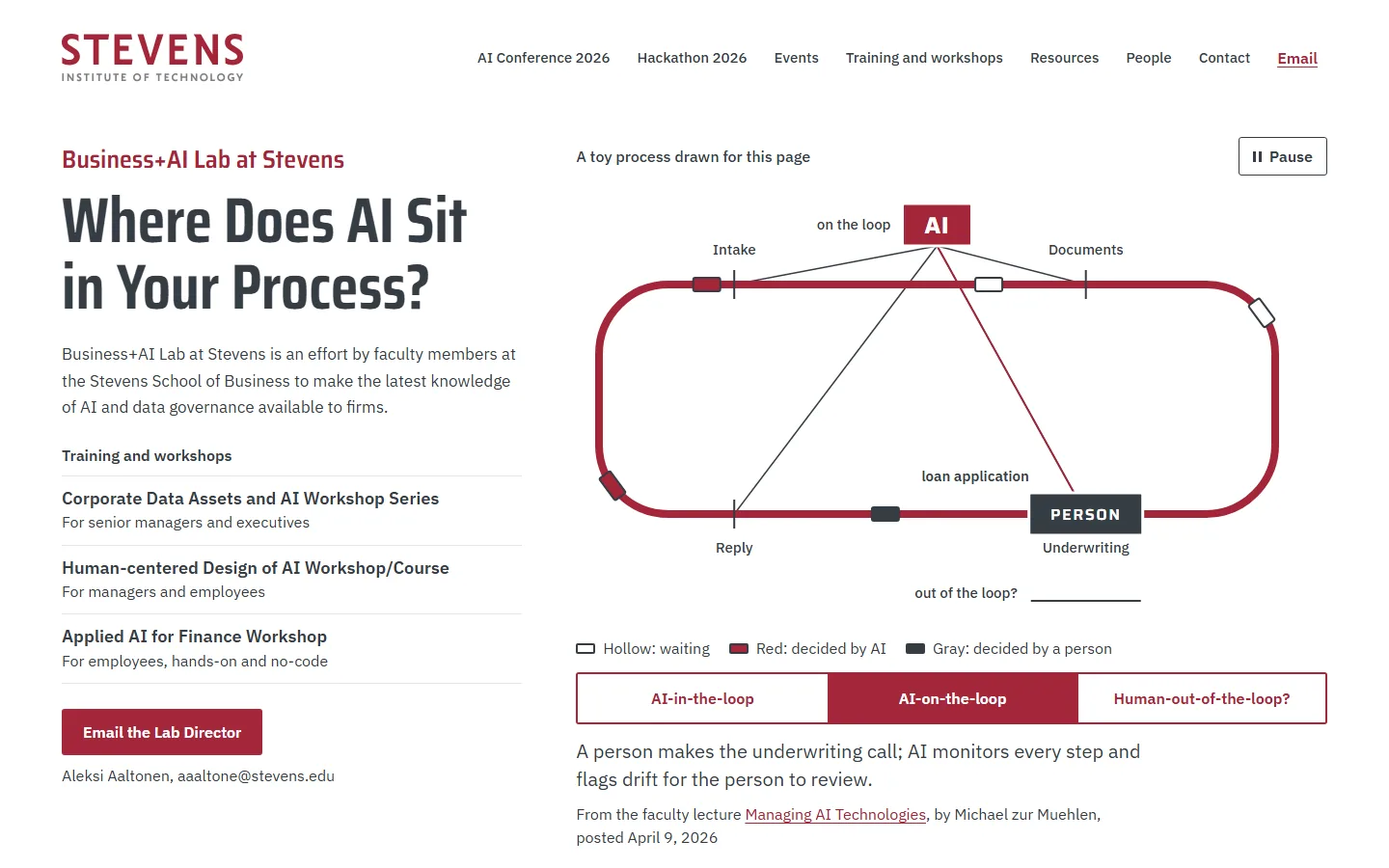
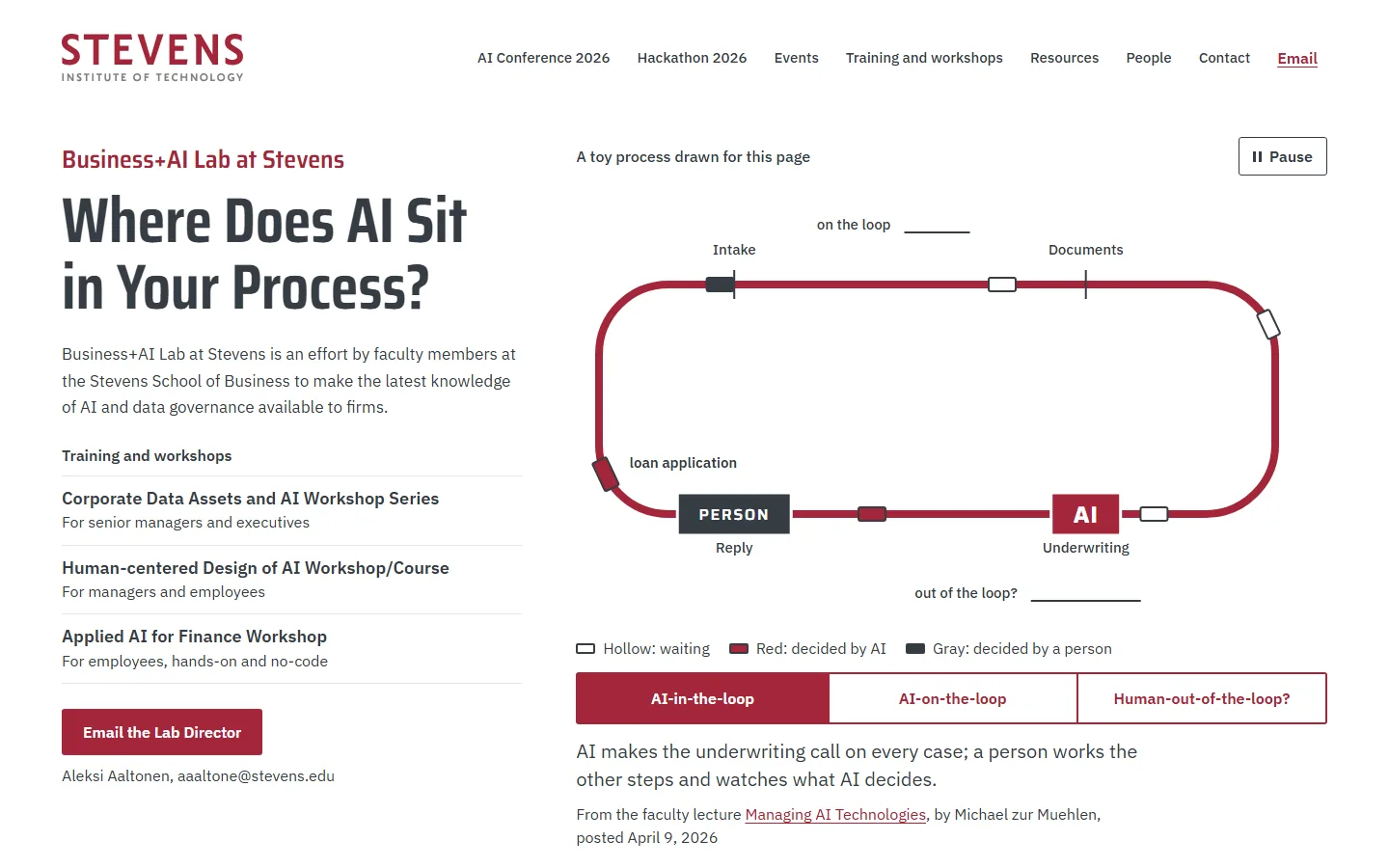
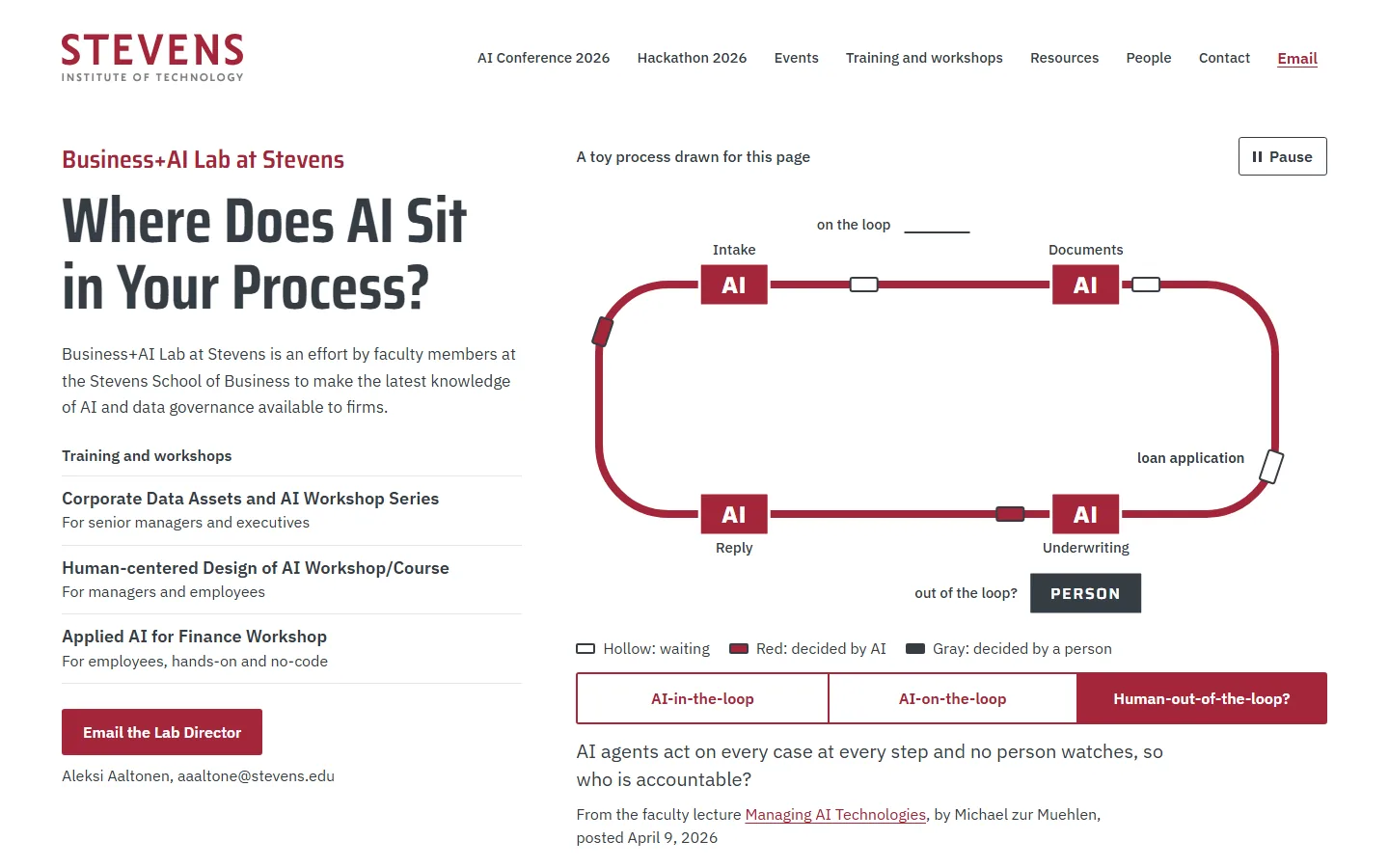
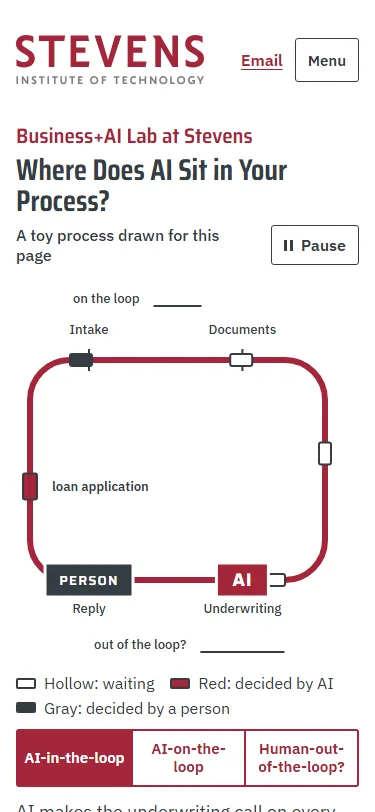
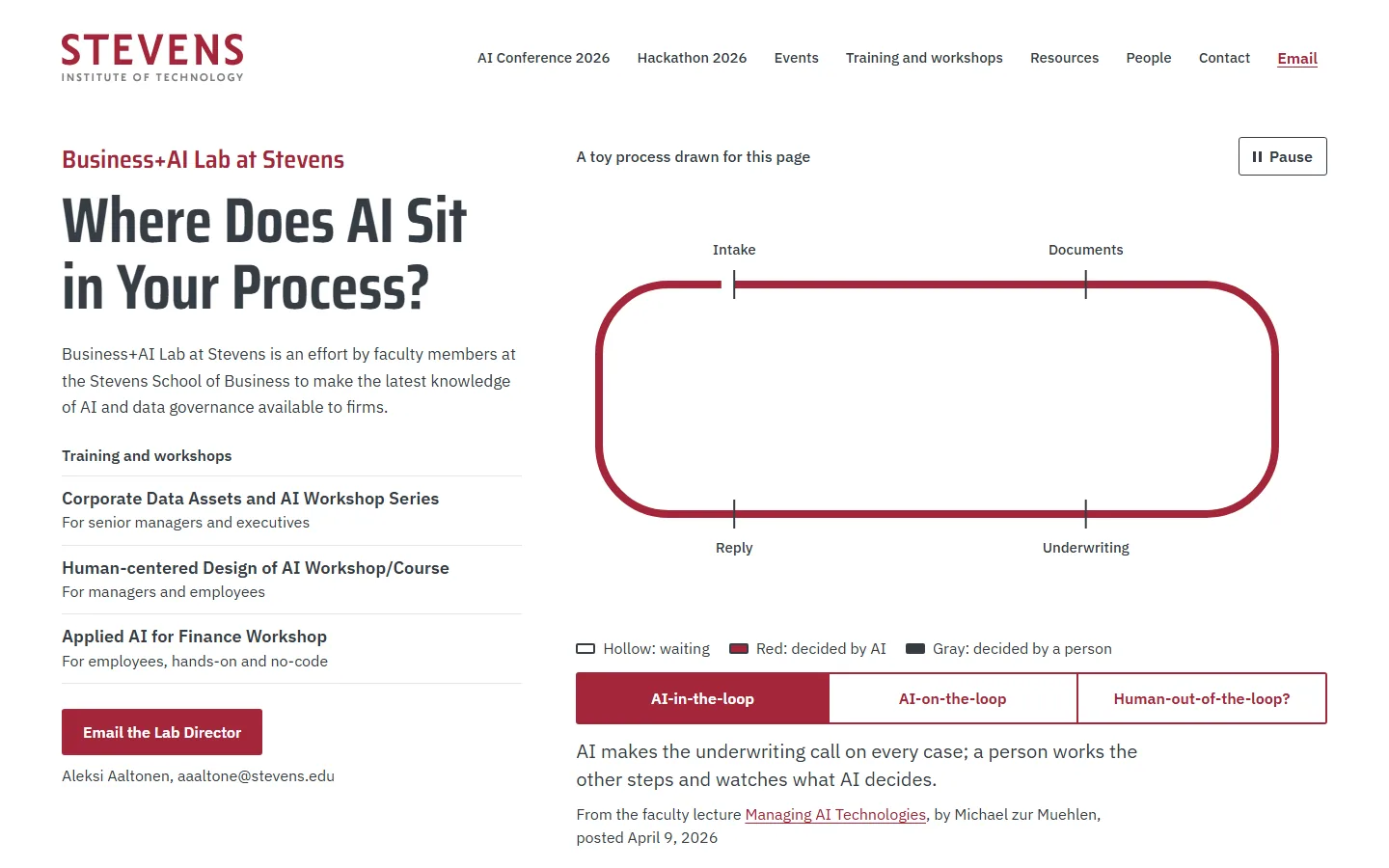
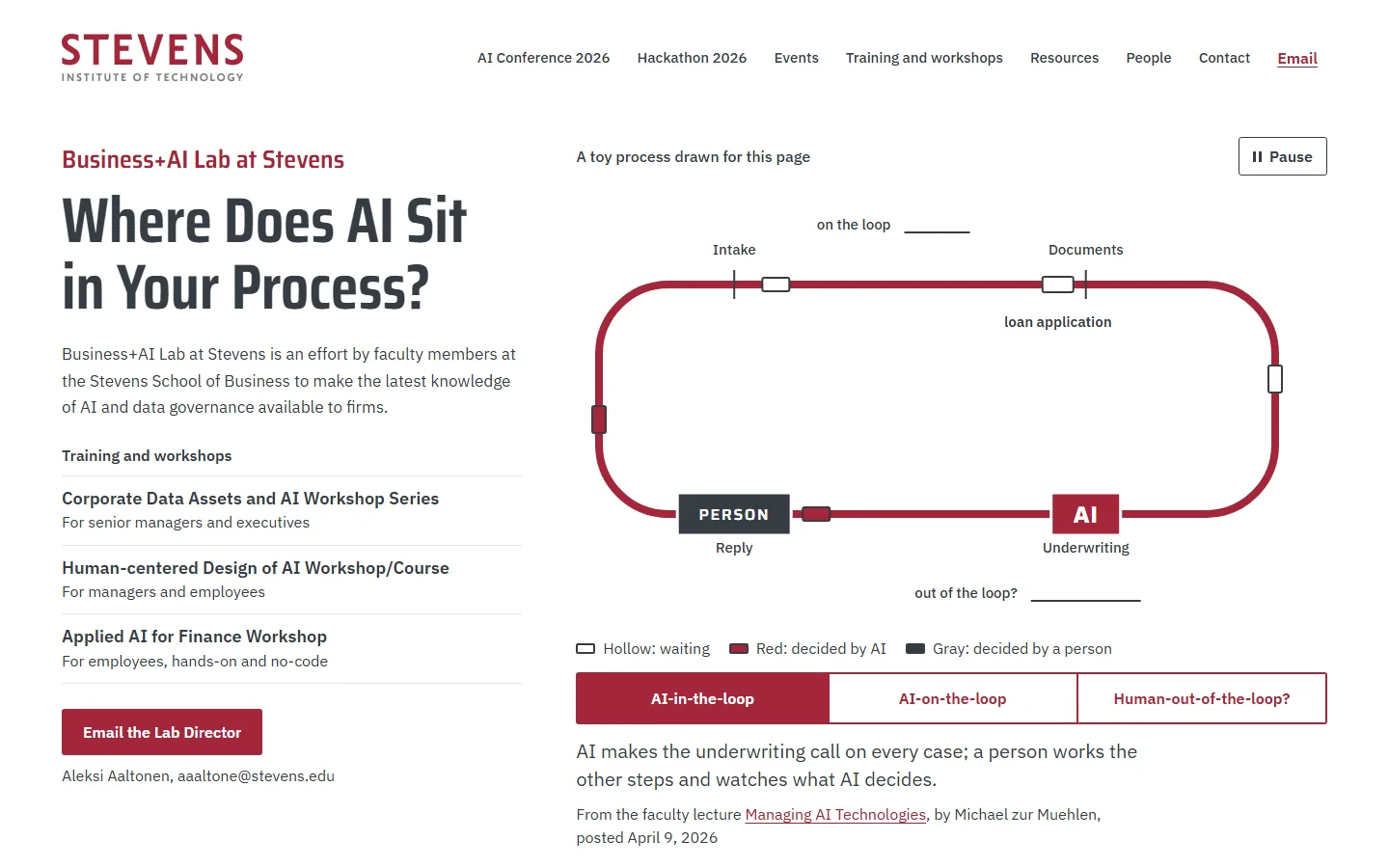
    The first screen is a loan application travelling one Stevens Red loop. Three buttons named after Michael zur Muehlen’s faculty lecture (AI-in-the-loop, AI-on-the-loop, Human-out-of-the-loop?) rewire the loop, and one sentence says who decides each case and who watches; it is the first sample where the visitor changes something and sees the result.

    1. Sample V on a laptop, moment 1: the question Where Does AI Sit in Your Process? beside a red loop with four stations, drawn and still empty1The loop draws itself as one red rule
    2. Sample V on a laptop, moment 2: AI-in-the-loop selected, the AI tag at Underwriting and the Person tag at Reply, cases travelling the loop2AI-in-the-loop: AI makes the underwriting call
    3. Sample V on a laptop, moment 3: AI-on-the-loop, the AI tag above the loop with thin lines to the stations and a red flag line to the loan application3AI-on-the-loop: AI watches and flags drift
    4. Sample V on a laptop, moment 4: the tour settled back on AI-in-the-loop4The tour settles on AI-in-the-loop
    5. Sample V on a laptop, interaction: Human-out-of-the-loop? chosen, AI tags at all four stations and the Person tag dropped into the seat below the loop5Choose Human-out-of-the-loop?
    Sample V, first screen on a phone: the question, the loop with its Person and AI tags, the key and the three buttons; the email is a small link in the headerPhone, first screen

    Open the page for sample V, In the Loop, with motion on

    Judges: idea 6, reader 6, craft 7.5; 19.5 of 30, in the craft judge’s top three.

    Before the review: let the 7.8 s tour play once, then click. On a phone the first screen holds the toy and a small Email link, with no offer.

    Fixed after judging: the two empty seats are now short underlines, like blanks on a form, so the only hollow boxes left are the waiting cases the key names.

    References

    • MIT Technology Review, “Can you make AI fairer than a judge?” (its graph page) lends one control over a visible population, with the result written as one plain sentence under it.

    • Nicky Case, LOOPY lends a loop of stations that draws itself on load before handing control to the reader.

    Needs approval before any public use: Michael zur Muehlen’s three states, the loan toy and its three sentences.

    Steps outside the Stevens brand: the loop has rounded corners and diagonal watch lines; red covers more of the first screen than the brand’s balance asks (36% at 1440, 42% on a phone); headings use Saira’s variable widths in place of Saira Condensed.

  3. Sample W: Show the Sources

    Candidate C05

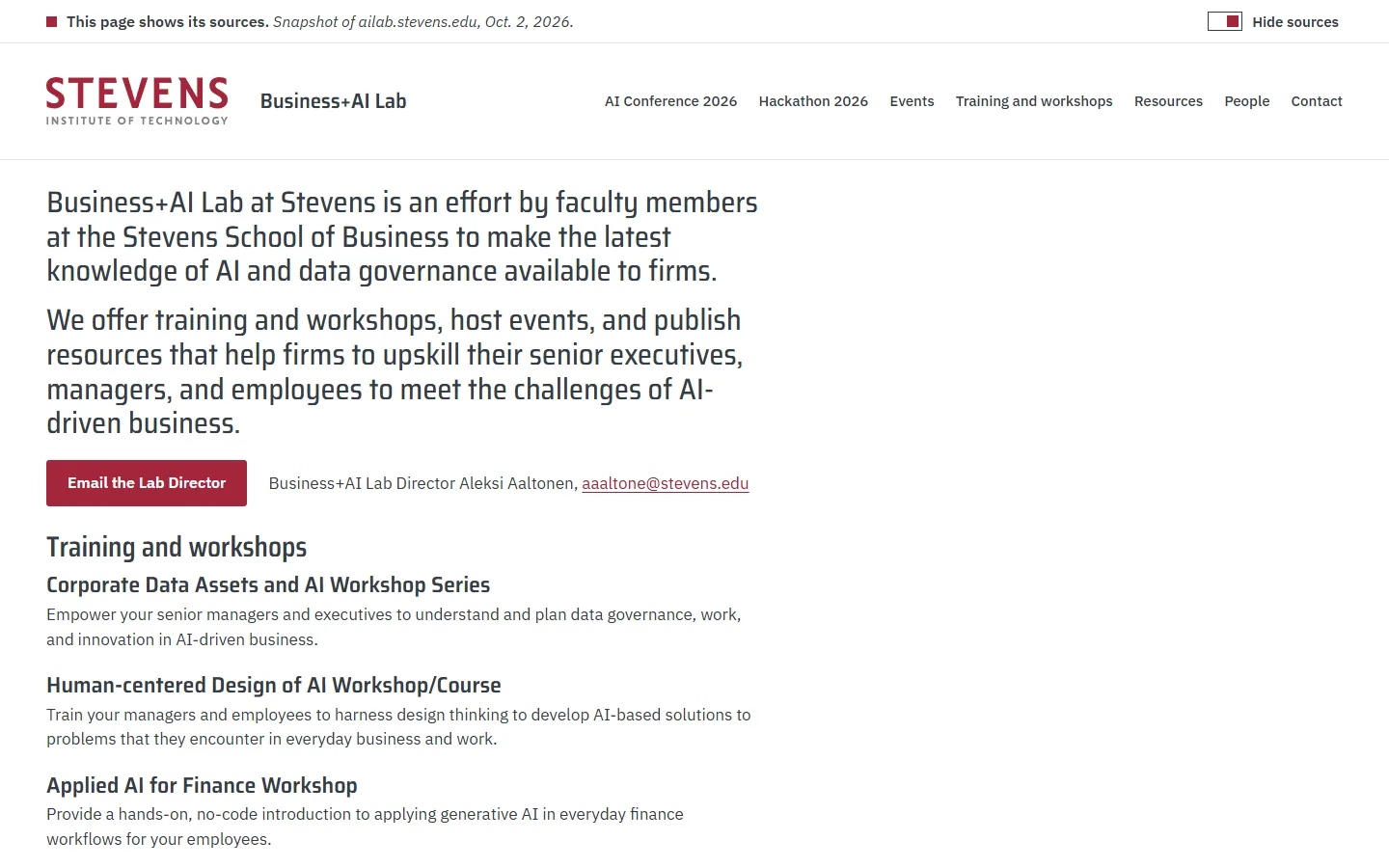
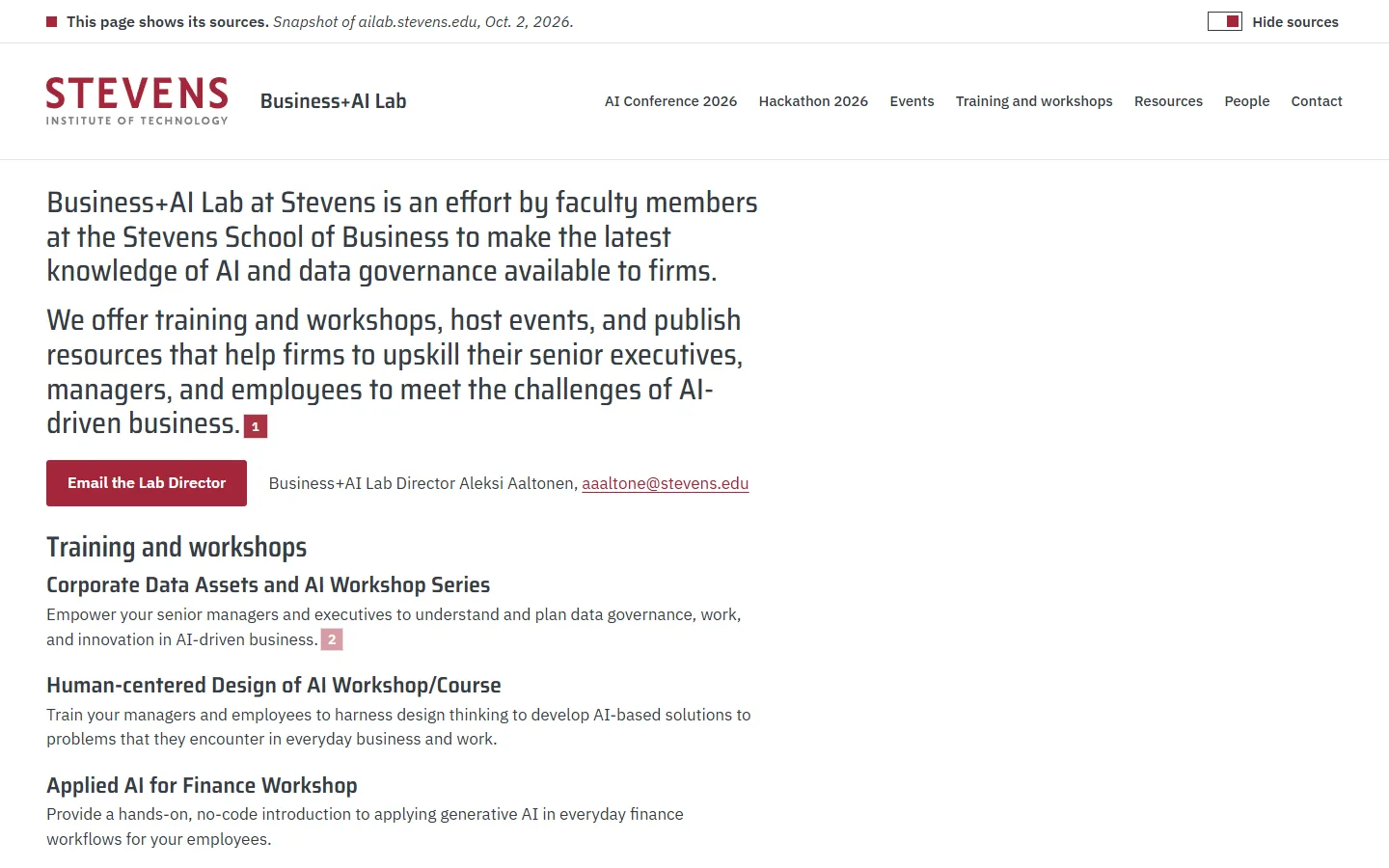
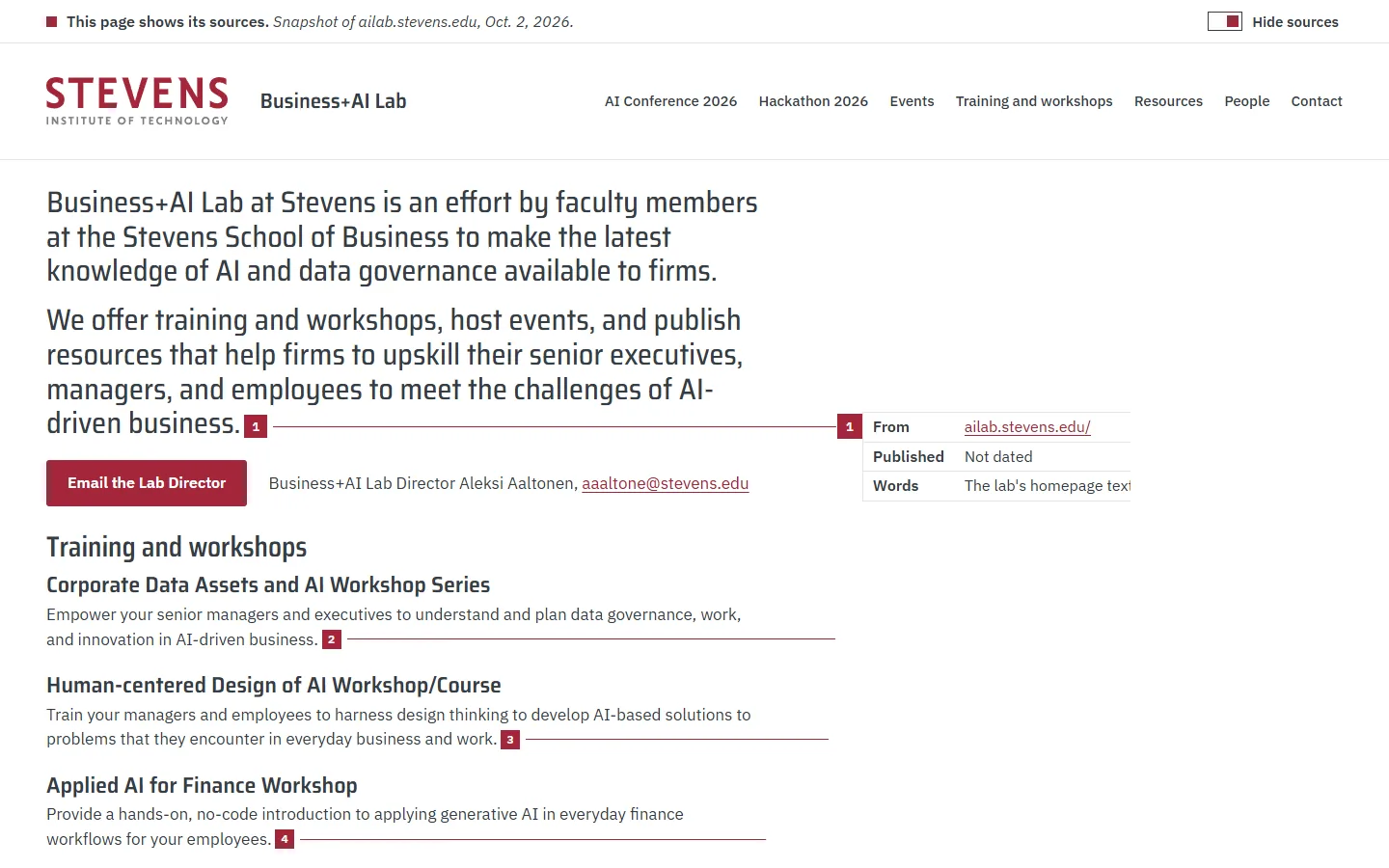
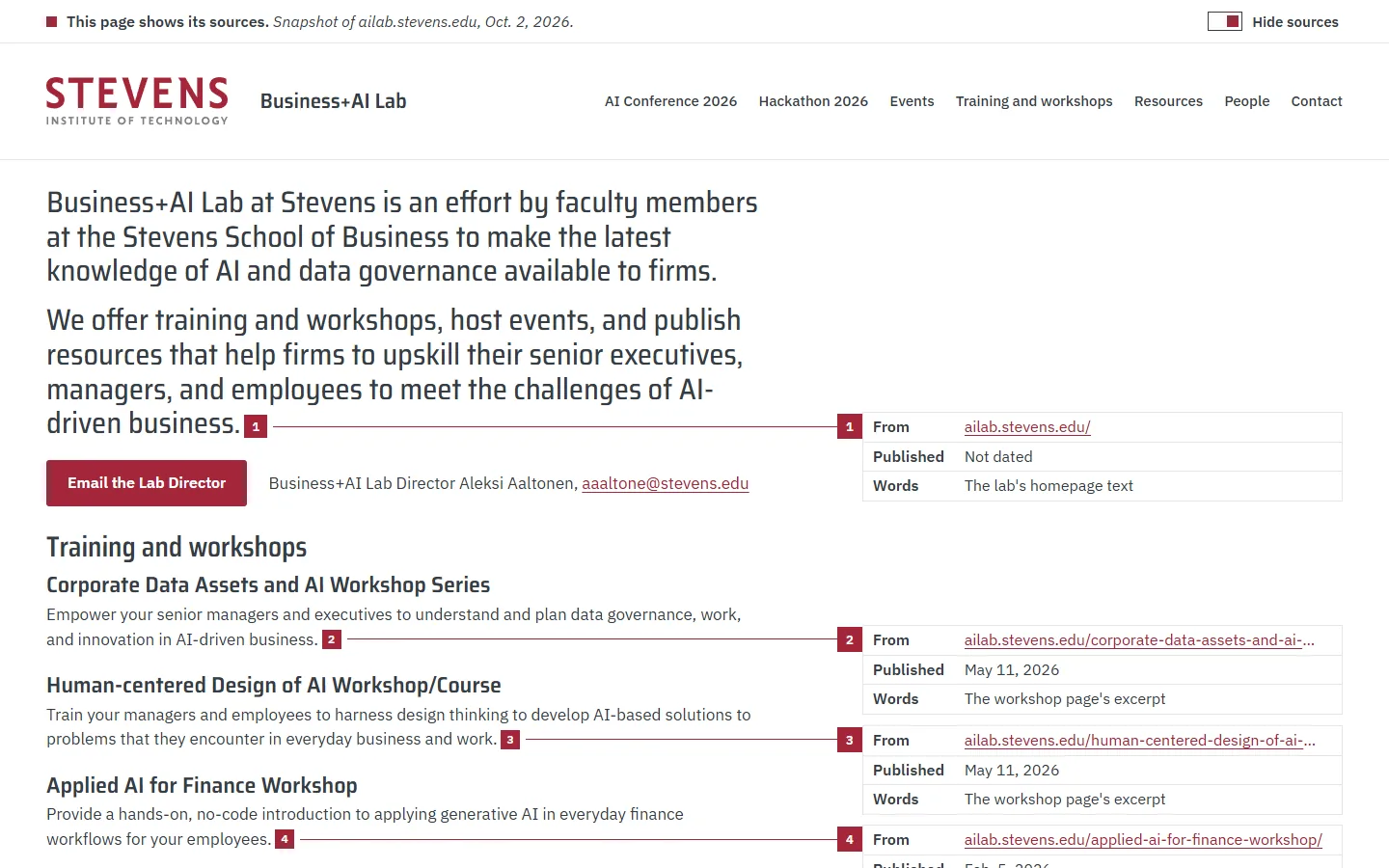
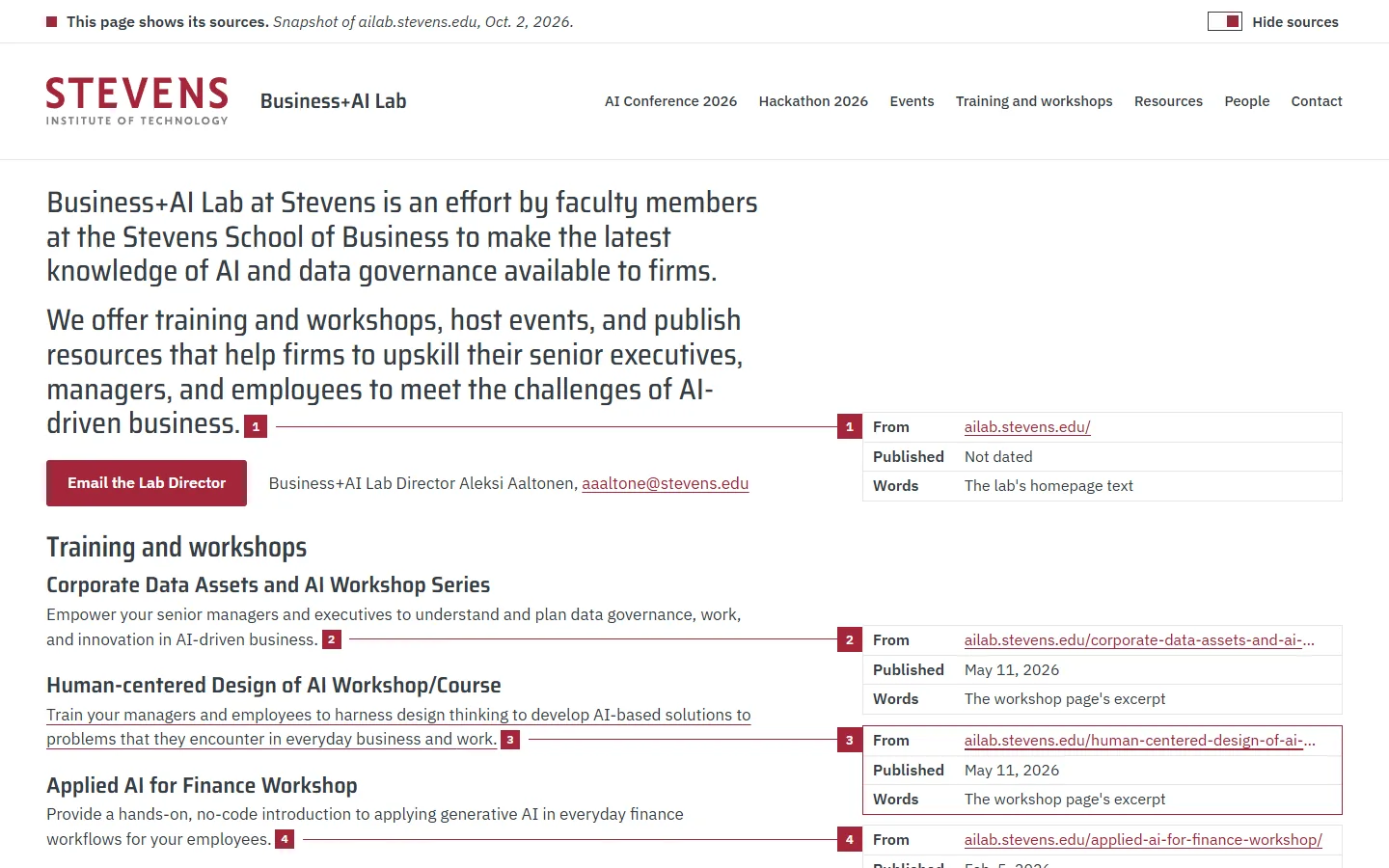
    A lab that teaches AI and data governance shows where its own homepage comes from. Every claim ends in a small numbered red mark whose rule runs out to a card in the margin naming the ailab.stevens.edu page the words come from and its date, and a switch hides the sources for plain reading.

    1. Sample W on a laptop, moment 1: the mission, the email button and the three workshops as plain text under the stamp line This page shows its sources1Plain text first
    2. Sample W on a laptop, moment 2: small numbered red marks set at the end of the mission and each workshop2A numbered mark after each claim
    3. Sample W on a laptop, moment 3: thin red rules running from the marks toward the right margin, the first card opening3Red rules run out to the margin
    4. Sample W on a laptop, moment 4: four source cards in the margin, each with From, Published and Words rows4Cards: address, date, whose words
    5. Sample W on a laptop, interaction: mark 3 pinned, the Human-centered Design workshop sentence underlined and its card outlined5Pin a mark: sentence and card pair up
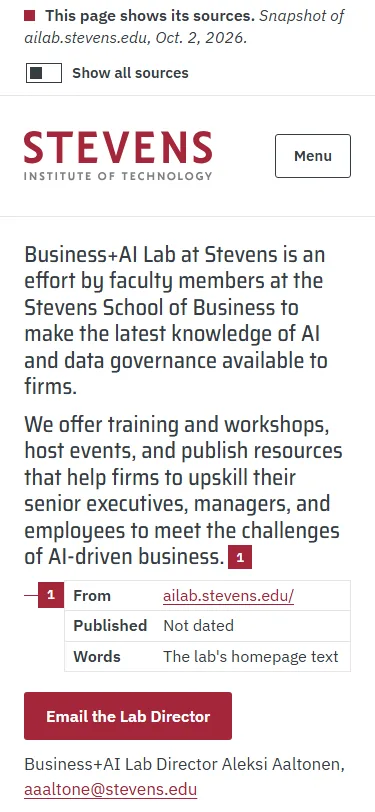
    Sample W, first screen on a phone: the stamp line, the mission with mark 1 and its source card open under it, and the Email the Lab Director buttonPhone, first screen

    Open the page for sample W, Show the Sources, with motion on

    Judges: idea 4, reader 7, craft 7; 18 of 30, in the reader judge’s top three.

    Before the review: the cards cite ailab.stevens.edu back to itself, which the idea judge read as circular, and this is the plainest first screen of the round.

    References

    • Content Credentials lends the small mark on the content that opens a white card with labeled rows split by hairlines.

    • GOV.UK, Algorithmic Transparency Recording Standard hub lends From and Published as plain labels and a fold of updates that works without JavaScript.

    Also drawn on: Gwern.net’s metadata line and hover card (ideas-provenance-gwern).

    Steps outside the Stevens brand: two line colors on one page (red source rules and gray hairlines); the marks stamp in from a larger size.

  4. Sample X: Crosshair Year

    Claude’s pickCandidate C04

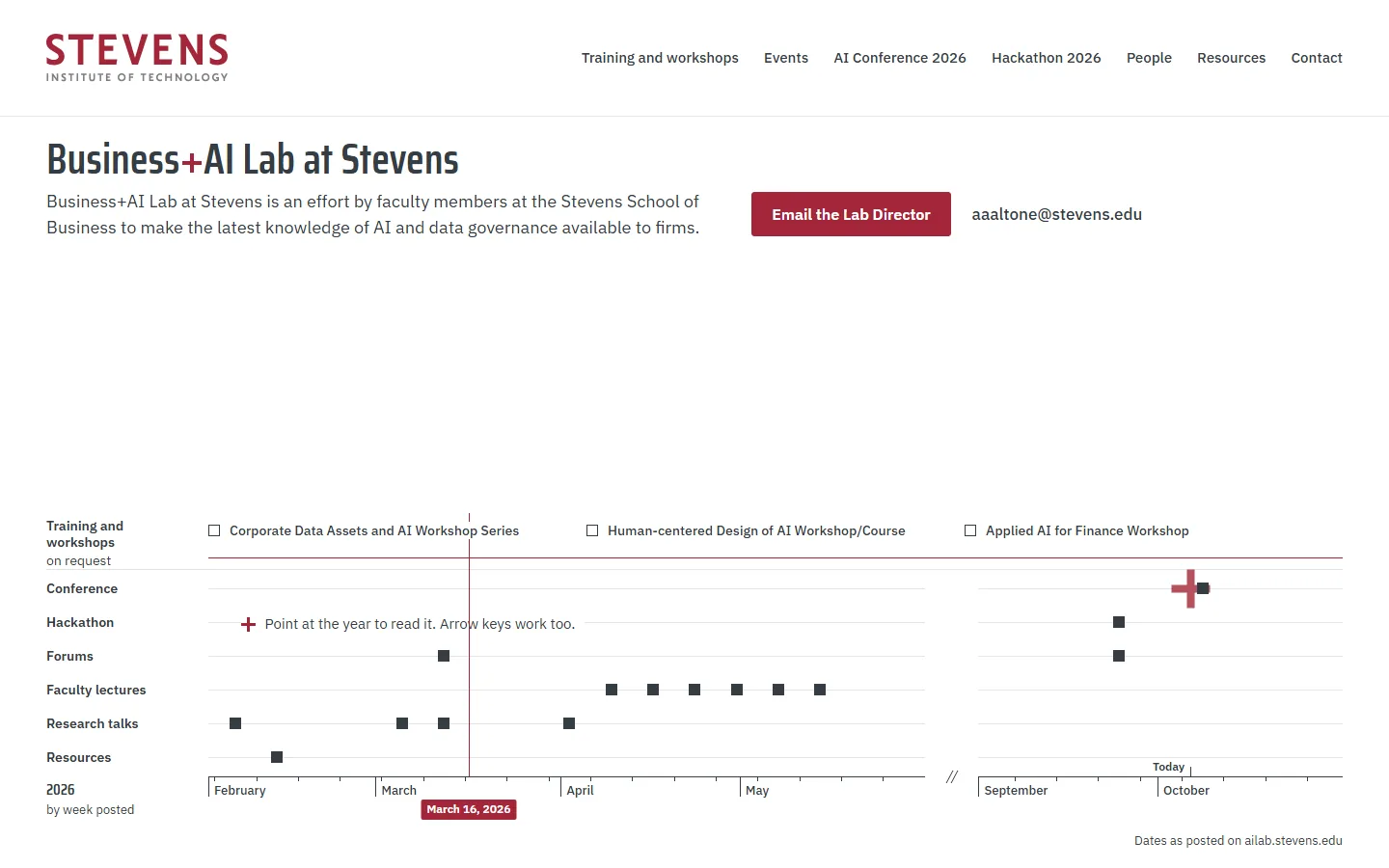
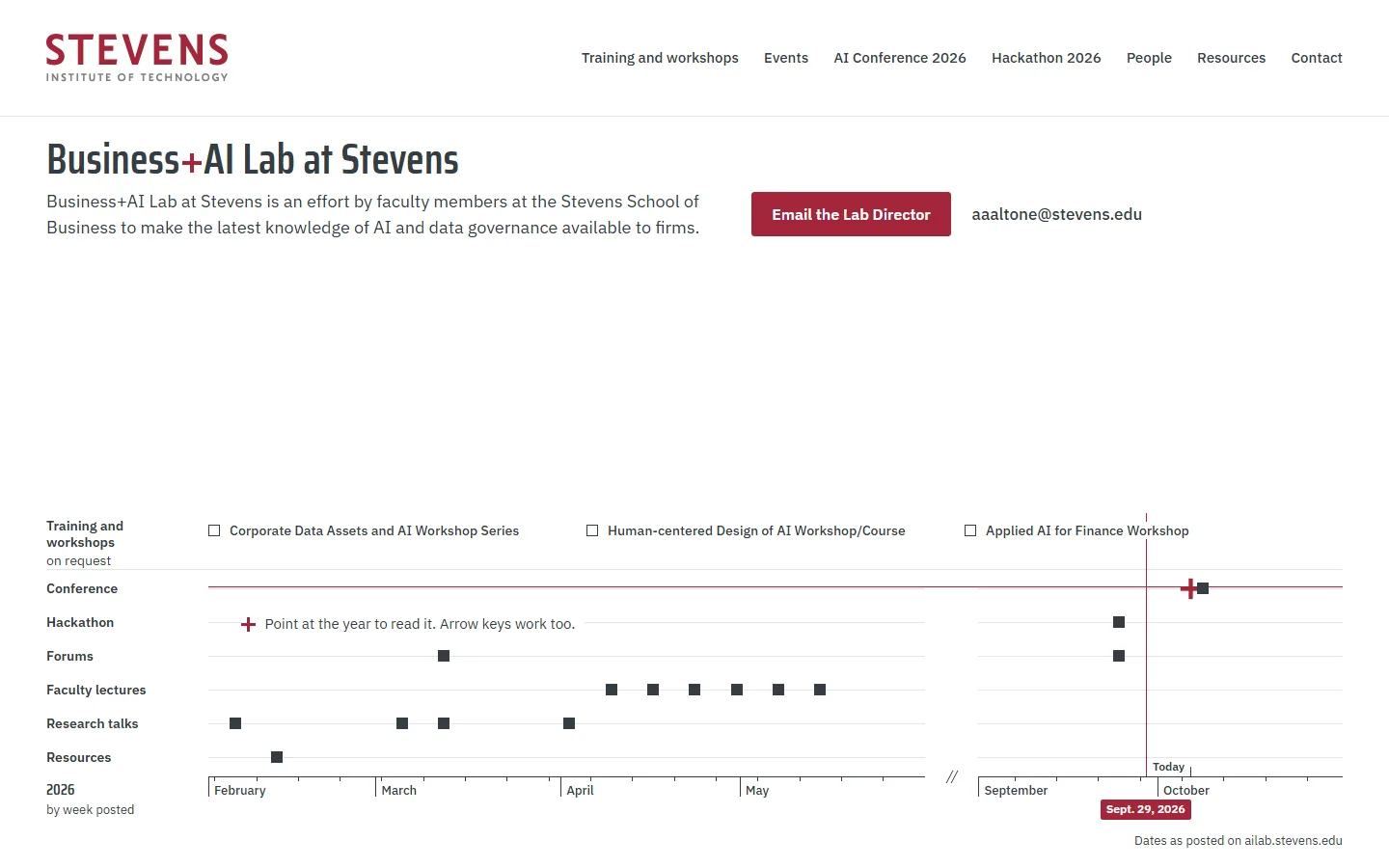
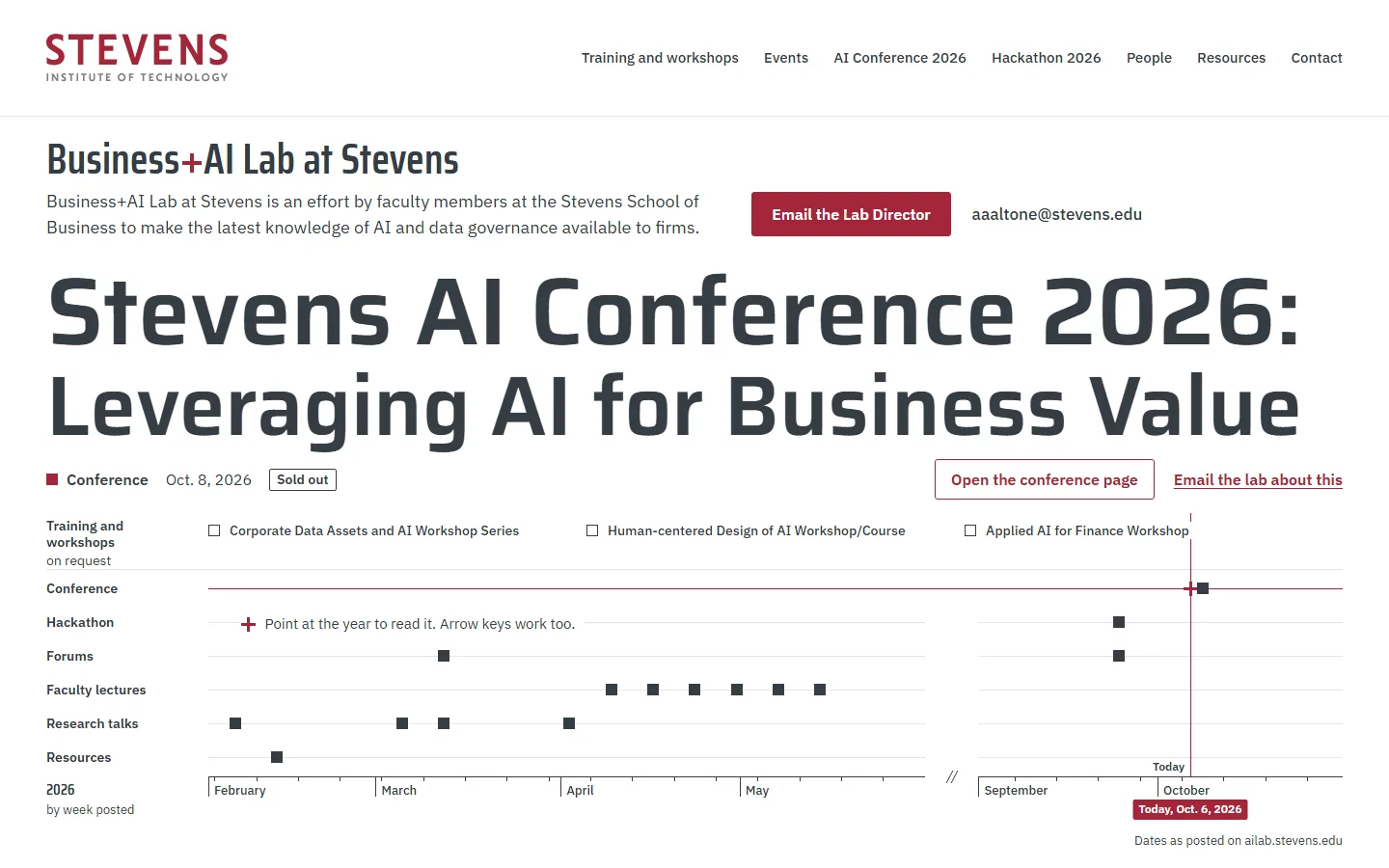
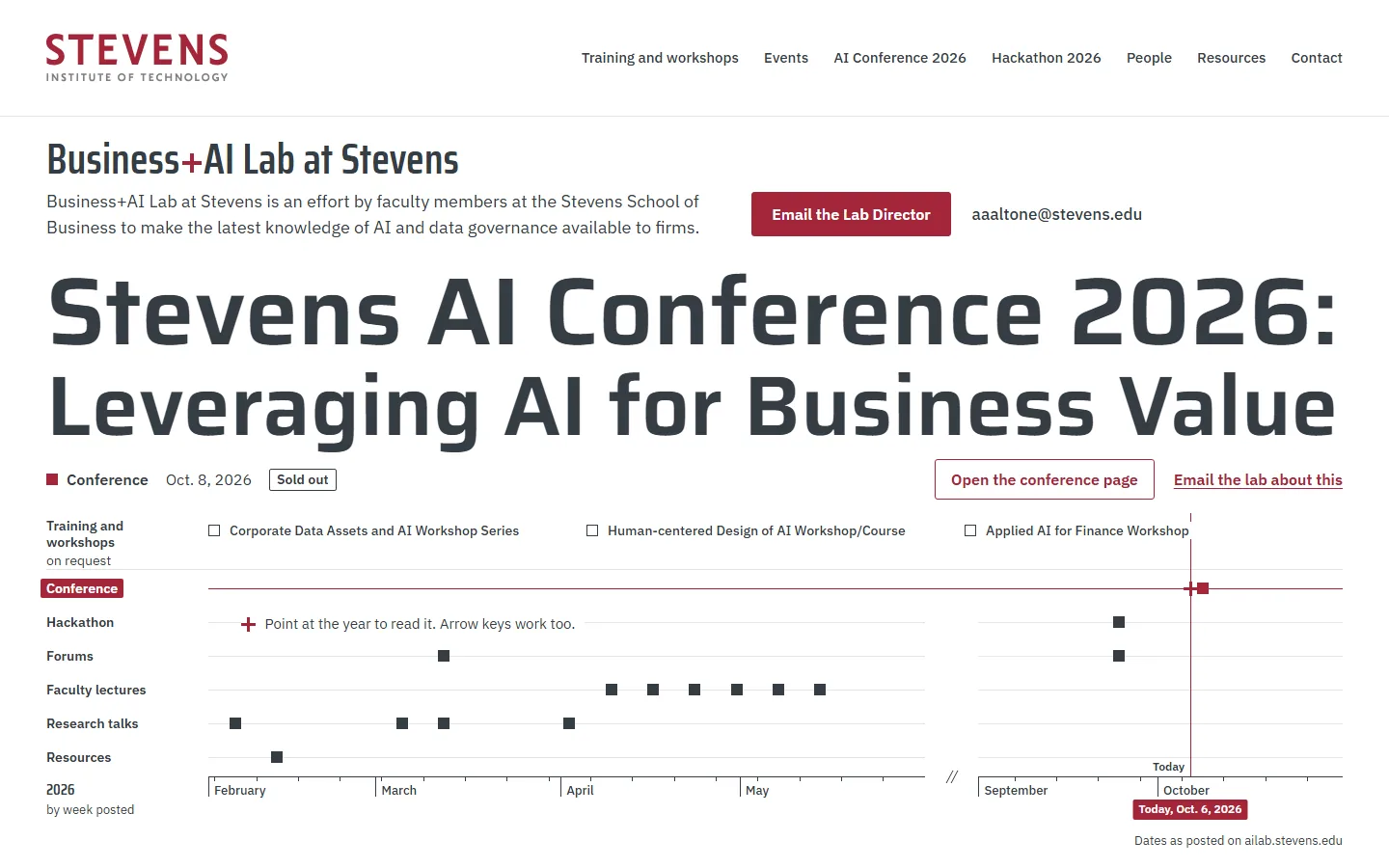
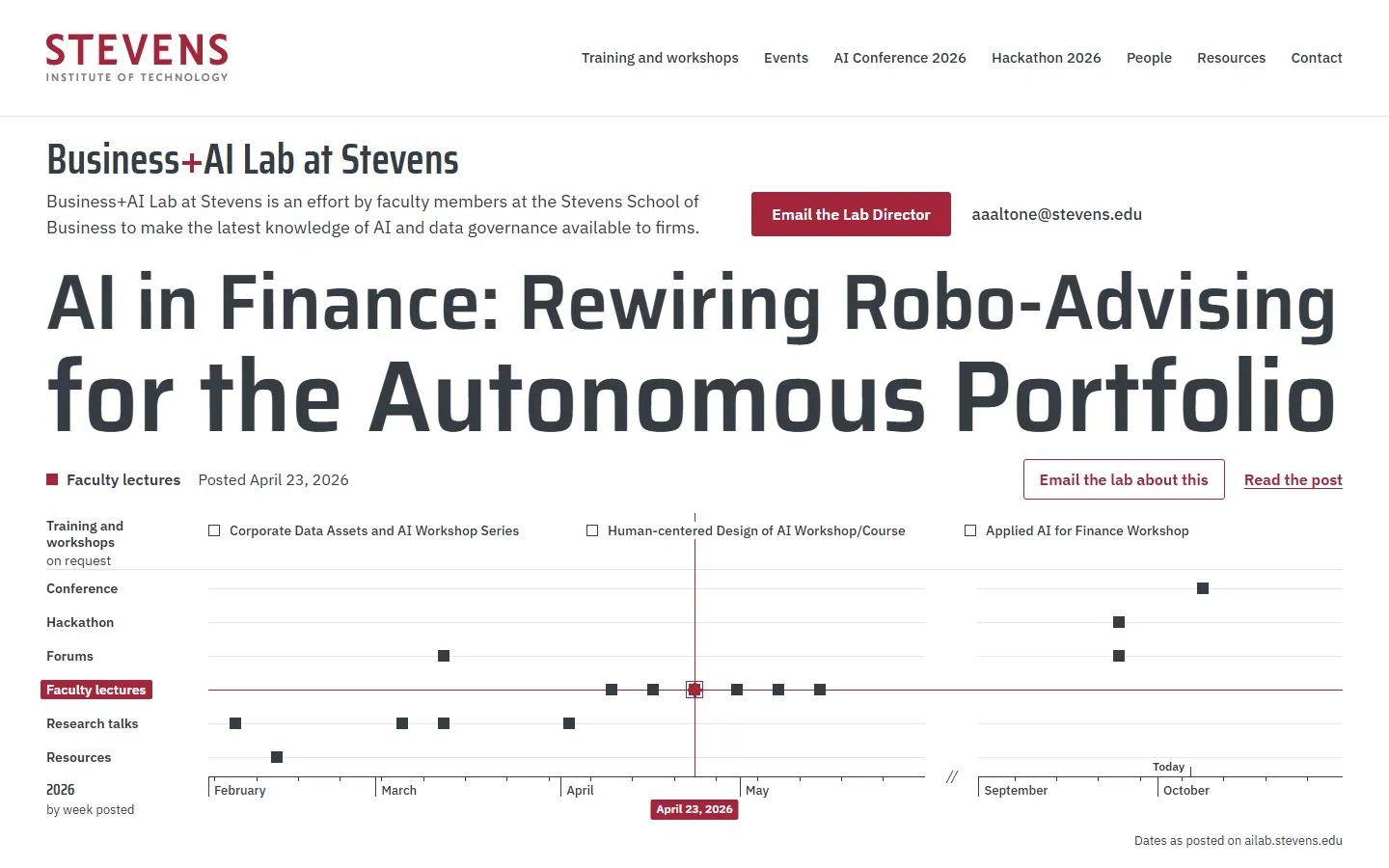
    The “+” of Business+AI becomes a measuring cross over the lab’s 2026: the 14 dated items lie by week in rows by kind, and when the red cross locks onto one, its title is set across the full width with an email button beside it. The three workshops form the top row, on request, with their own lock.

    1. Sample X on a laptop, moment 1: the year chart with rows by kind, a large red plus near October and the date line at March 161The red “+” appears first
    2. Sample X on a laptop, moment 2: the date line has run to Sept. 29 and the plus has settled on the conference row2The date line runs toward today
    3. Sample X on a laptop, moment 3: the cross meets today and the conference title is set across the full width3The cross meets today; the title sets
    4. Sample X on a laptop, moment 4: at rest on Today, Oct. 6, 2026, with the conference title, its Sold out tag, the Open the conference page button and Email the lab about this4At rest: Today, Oct. 6, 2026
    5. Sample X on a laptop, interaction: the cross locked on the AI in Finance lecture, its title set full width with its posted date5Point at a lecture: AI in Finance locks
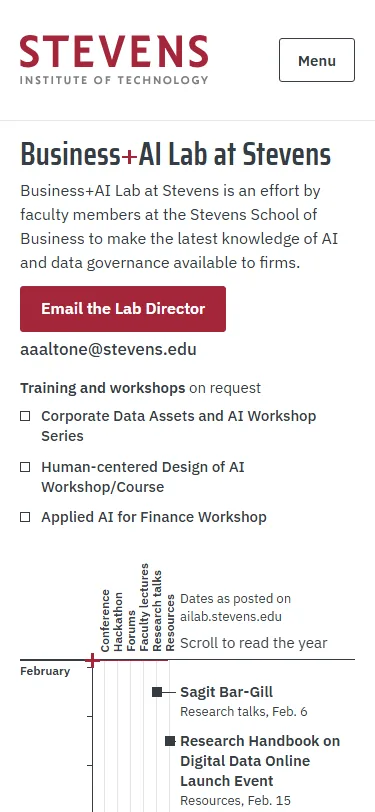
    Sample X, first screen on a phone: the name with its red plus, the mission, the email button and address, the three workshops on request, and the top of the year with its reading linePhone, first screen

    Open the page for sample X, Crosshair Year, with motion on

    Open it resting on a workshop, sample X with motion on · Open it resting on the conference, sample X with motion on

    Judges: idea 8, reader 7, craft 7; 22 of 30, in all three top-three lists.

    Before the review: until Oct. 8 the page rests on the conference; after Oct. 8 it rests on a workshop, and the conference still reads Sold out. Move and pause the pointer: a fast sweep does not change the title.

    Fixed after judging: the conference now carries a Sold out tag and leads with its own page, with the email second; the hackathon reads Past event, and both show their event date in place of “Posted”. The two tags are new sample copy, for approval.

    References

    • Library of Congress, Citizen DJ lends position equals record, one drag gesture for mouse and finger, and one instruction line that goes away on first use.

    • Ableton, Learning Synths lends named X and Y axes with arrow-key steps.

    Also drawn on: The Rhythm of Food’s “now” computed from the visitor’s clock (ideas-year-rhythm-of-food).

    Steps outside the Stevens brand: a red “+” drawn inside the dark heading, and the “+” used as the lab’s signature (the brand gives it to the hackathon); the large title runs Saira’s full width range, and its lines may stop short of the edge; slanted axis-break strokes and rotated lane names on phones.

  5. Sample Y: Research Tree

    Candidate C09

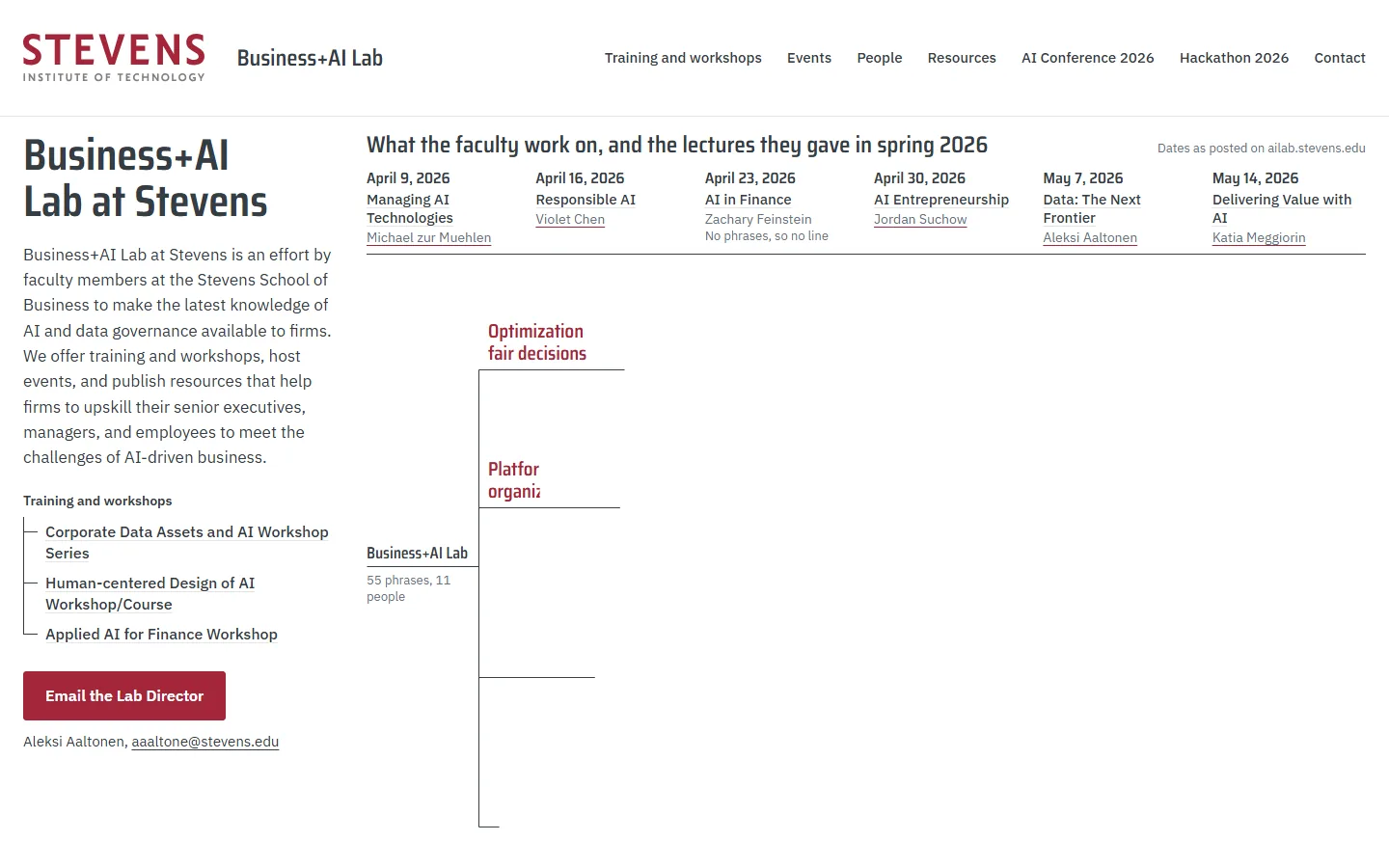
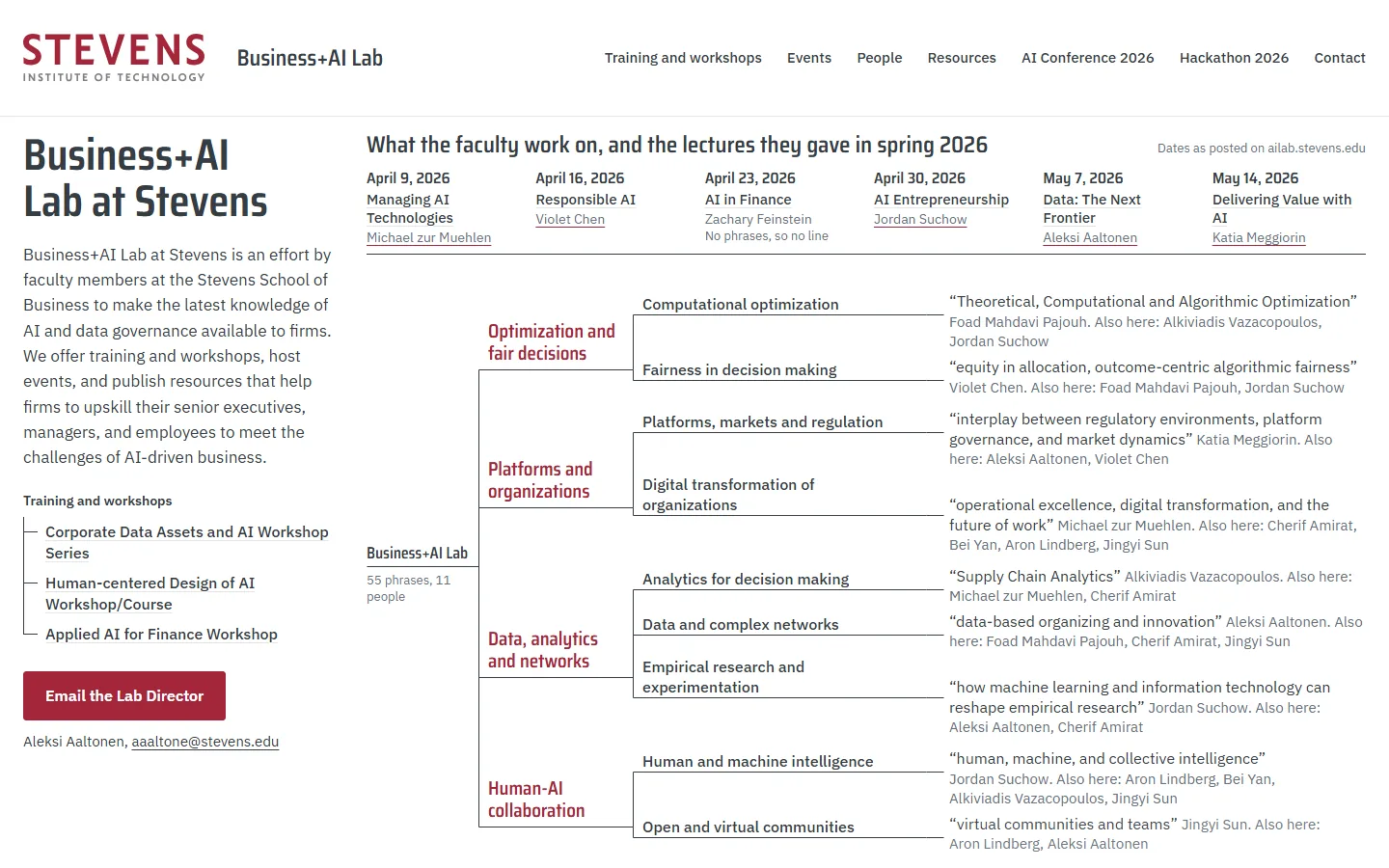
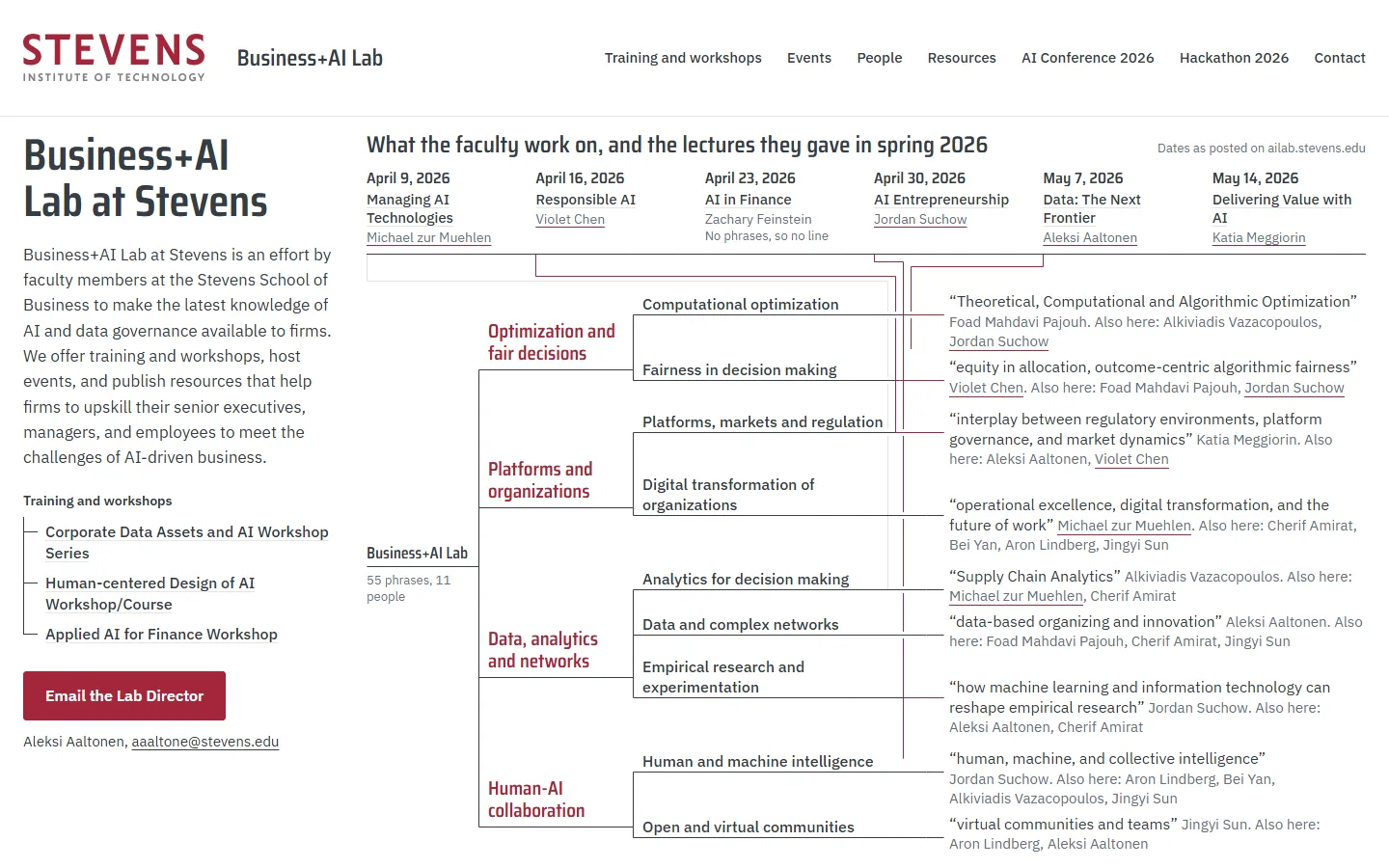
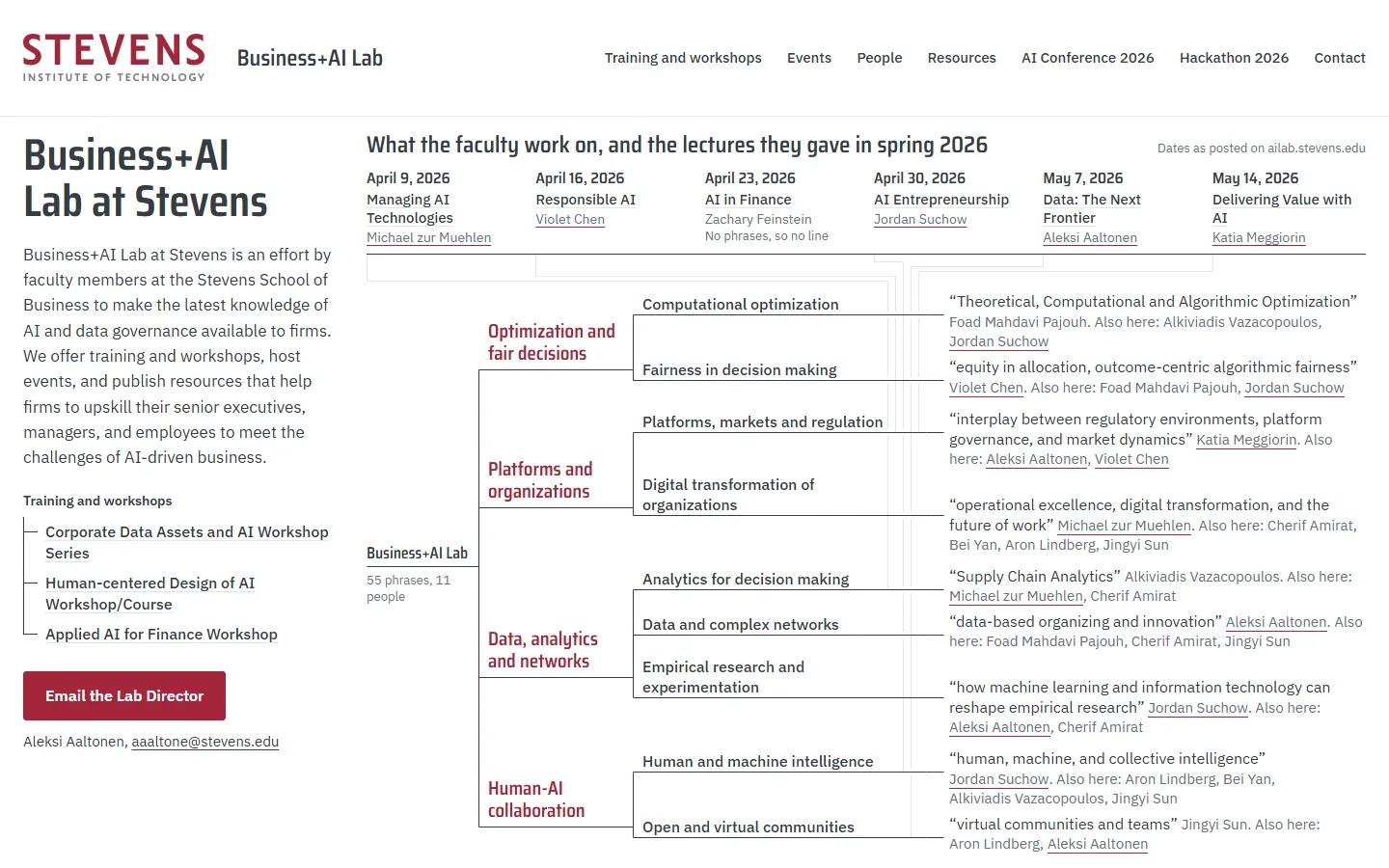
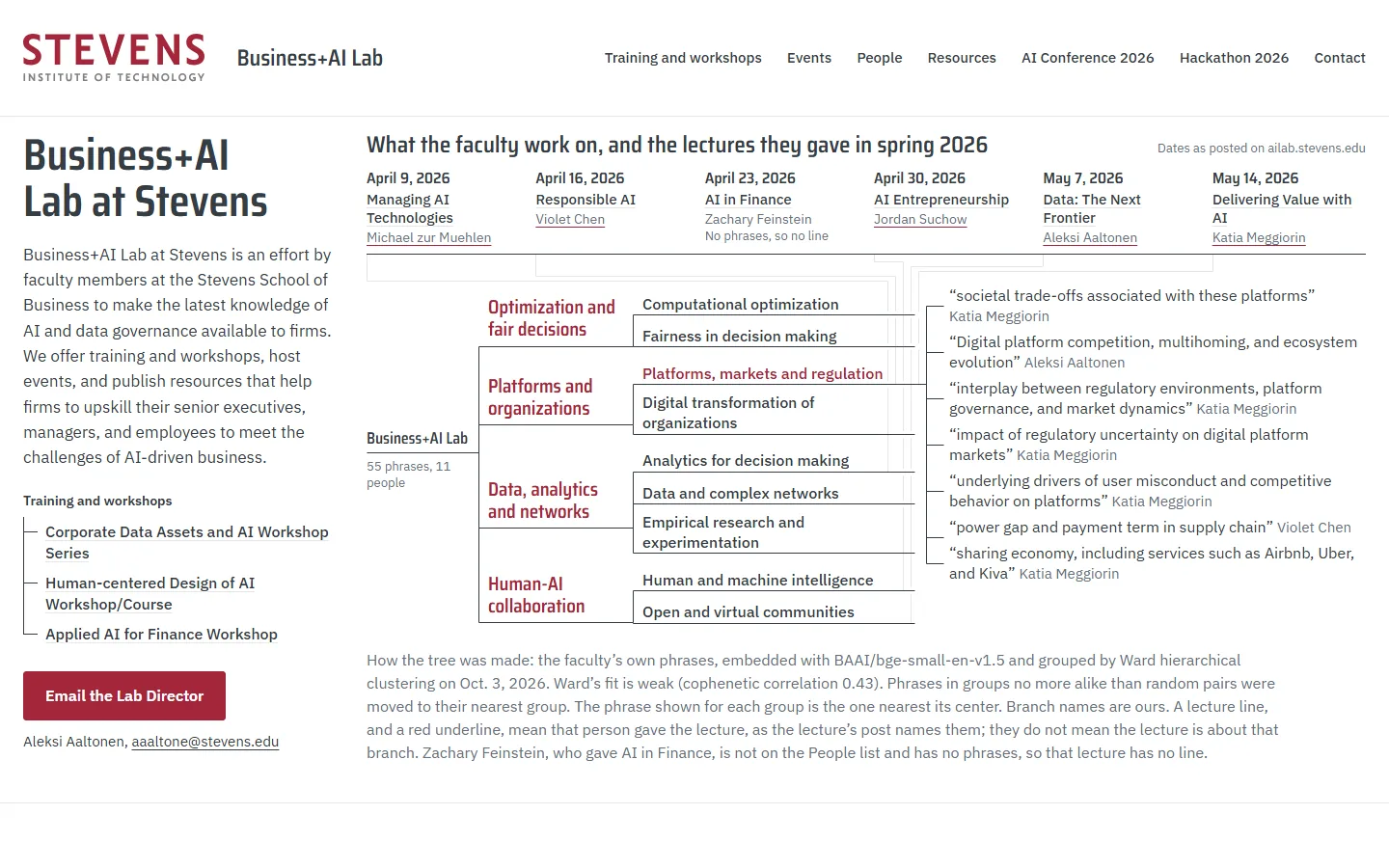
    The faculty’s research is drawn as one family tree in thin right-angled rules and type: the root splits into four branches and nine sub-branches, each ending in a professor’s own phrase with their name in gray. Above it the six spring 2026 faculty lectures hang from a dated band, and each drops a red line to the branches of the person who gave it.

    1. Sample Y on a laptop, moment 1: the root rule runs in and splits toward the first branch names, under the band of six lectures1The root rule runs in and splits
    2. Sample Y on a laptop, moment 2: four branches and nine sub-branches drawn, each sub-branch ending in a quoted faculty phrase with names in gray2Nine sub-branches, nine faculty phrases
    3. Sample Y on a laptop, moment 3: red lines drop from lectures in the band to the sub-branches of their speakers3Each lecture drops a line to its speaker
    4. Sample Y on a laptop, moment 4: the tree at rest, the lecture lines receded to light gray4At rest the lines recede to gray
    5. Sample Y on a laptop, interaction: the sub-branch Platforms, markets and regulation opened into its phrases, each with a name, and the methods note below5Open a sub-branch to read its phrases
    Sample Y, first screen on a phone: the name, the mission, the three workshops and the Email the Lab Director button; the tree starts belowPhone, first screen

    Open the page for sample Y, Research Tree, with motion on

    Judges: idea 7, reader 4, craft 5; 16 of 30, in the idea judge’s top three.

    Before the review: show it at 1440 x 900, since the phone’s first screen has no tree. It answers Shichao’s request for the faculty themes as a branching tree, redrawn in rules with no dots.

    References

    • Tree of Life web project lends the right-angled cladogram with names set on the rules, a gray gloss after each tip and a footnote on how the tree was made.

    • Deniz Cem Önduygu, History of Philosophy lends a spine of sentences with hairline links to one side, and a phone list of heavy names with sentences below.

    Needs approval before any public use: the 55 faculty phrases (each professor) and the 13 branch and sub-branch names, which are ours (Aleksi).

    Steps outside the Stevens brand: a gray outside the Stevens palette for names and dimmed text; some labels and captions at 13 to 15 px; a left column narrower than the brief asks.

  6. Sample Z: Open Index

    From the type track

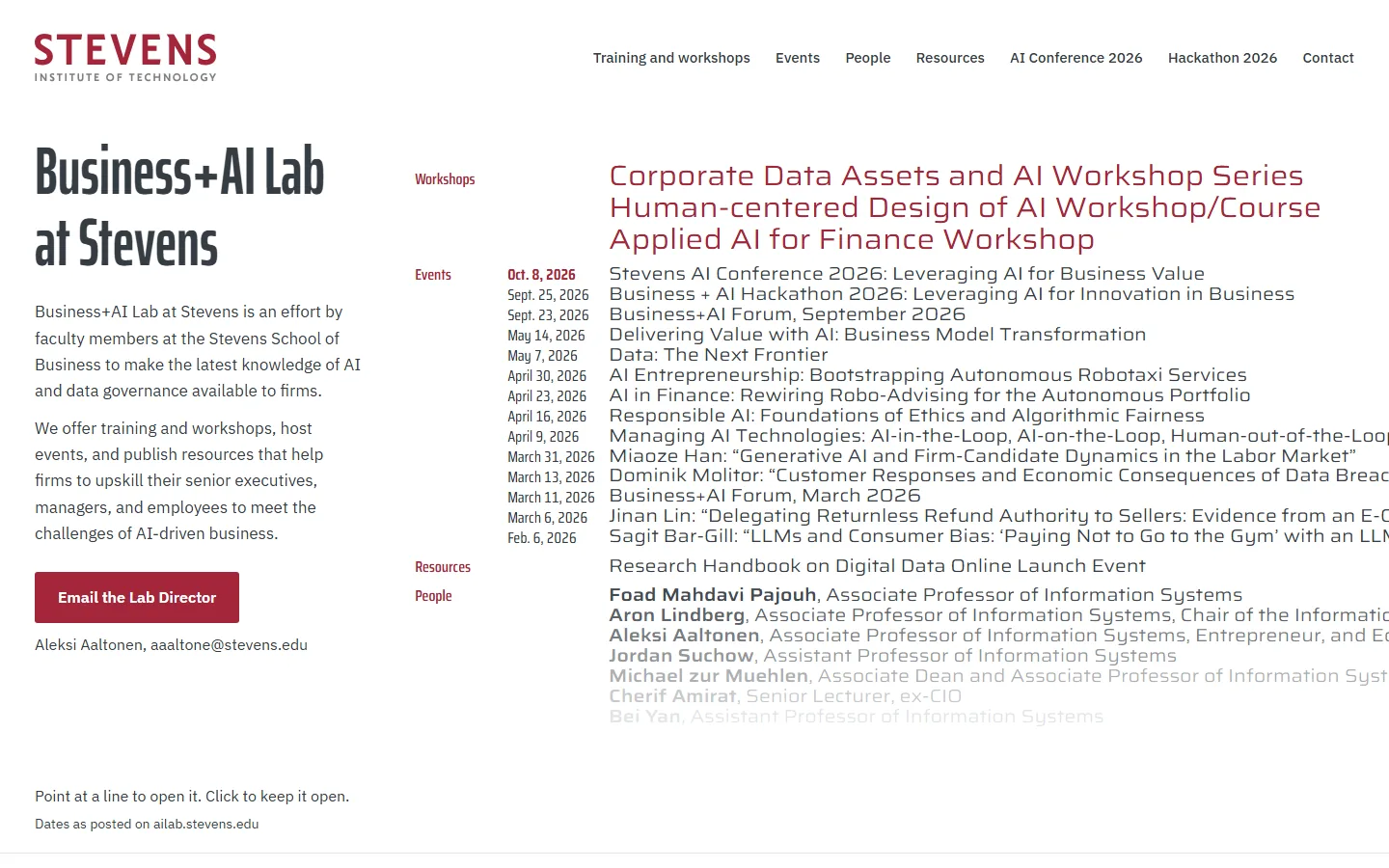
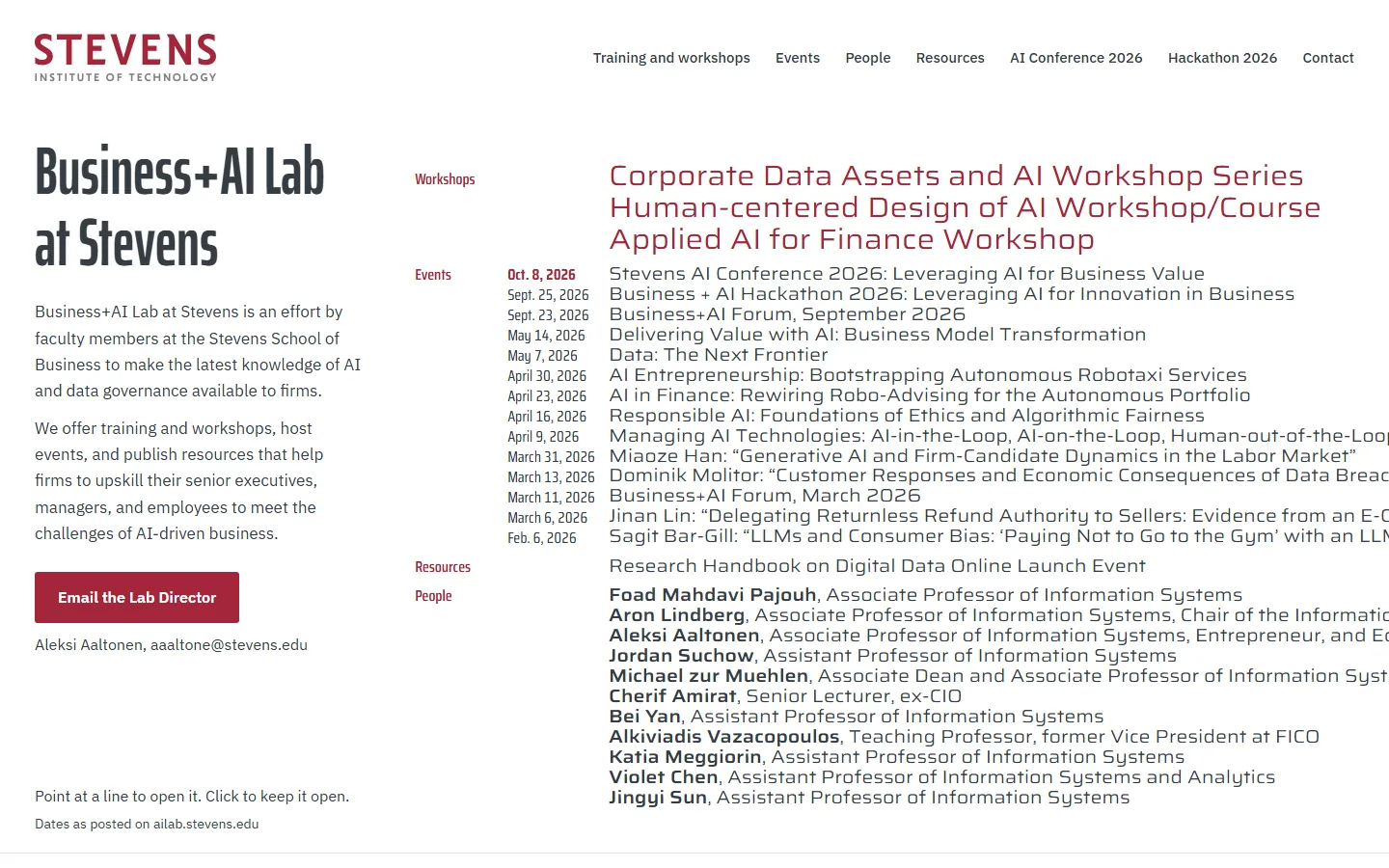
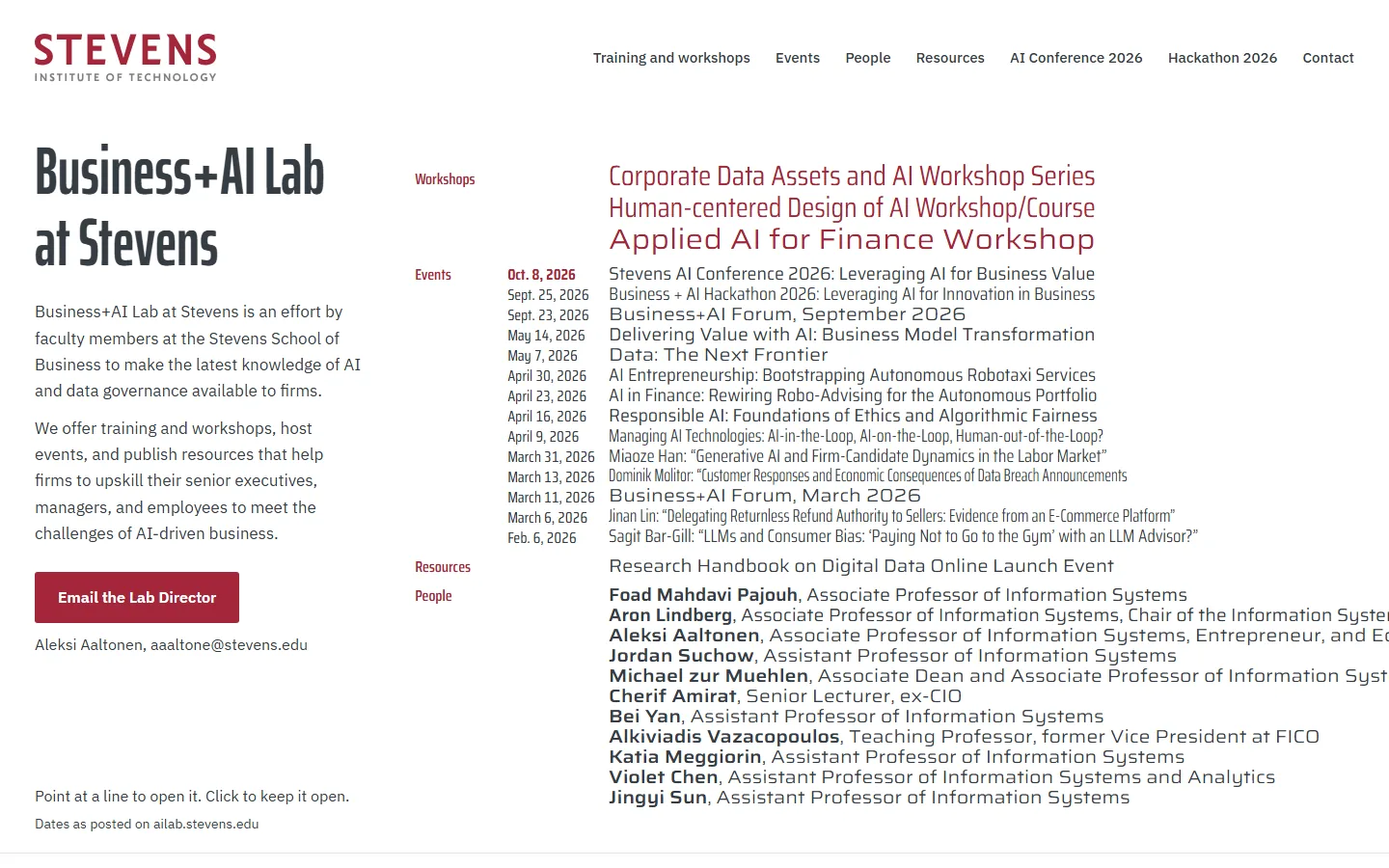
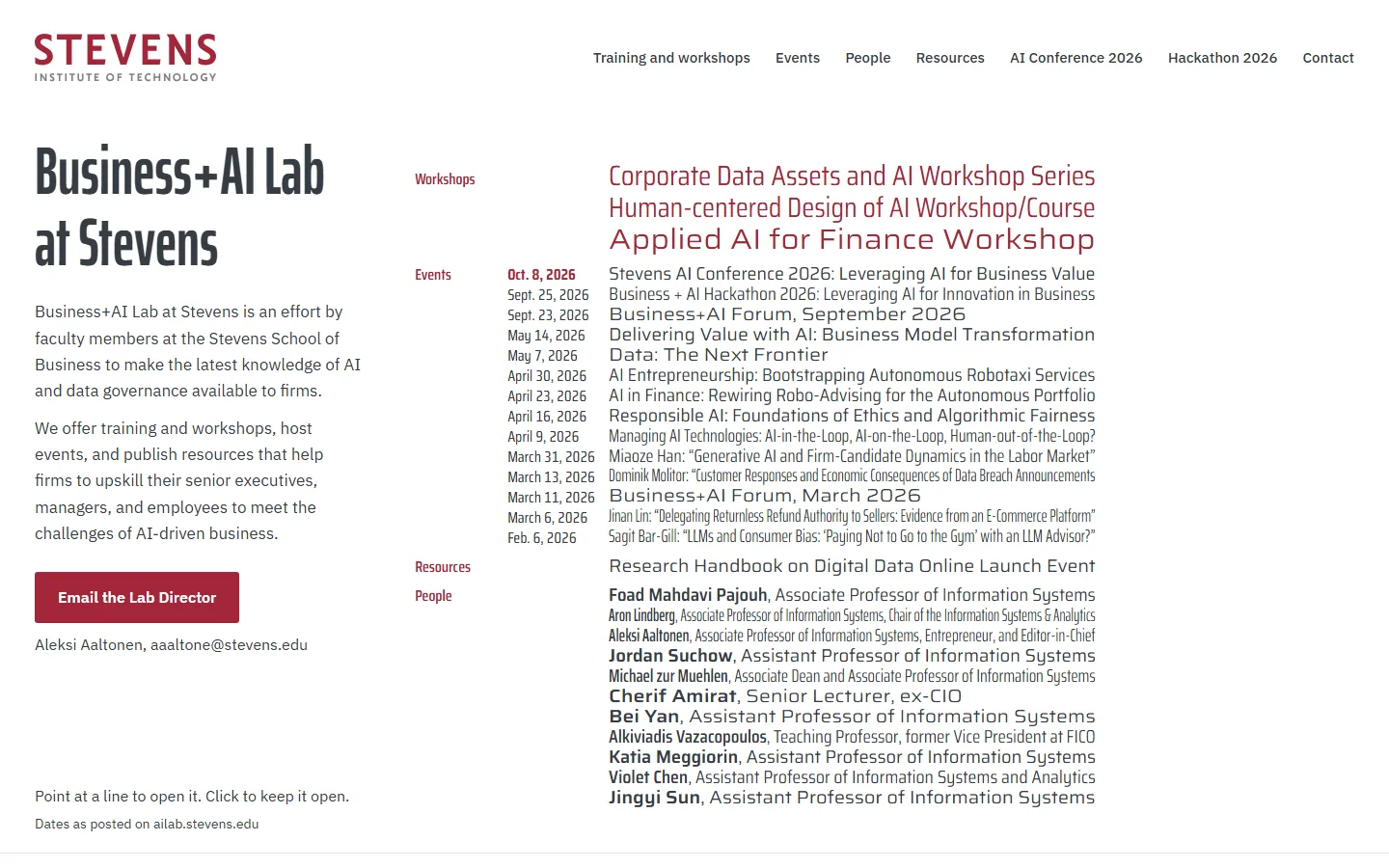
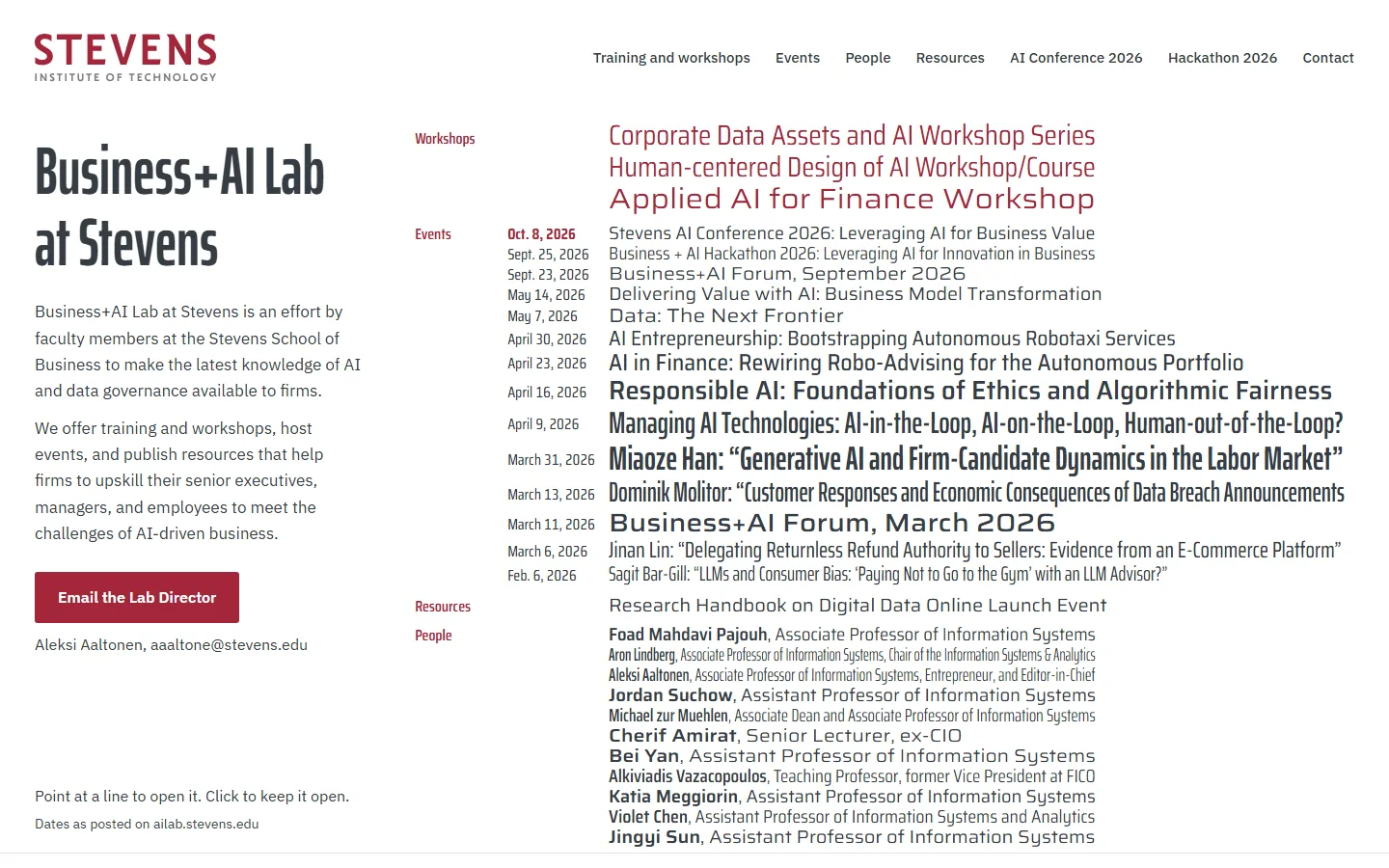
    Everything the lab offers and everyone in it sits on one screen as a single rectangle of Saira, each line solved on the font’s width axis to end on the same edge. The line under the pointer (on a phone, the line at the middle of the screen) widens and gains weight while its neighbors ease back.

    1. Sample Z on a laptop, moment 1: the lab's 29 lines coming on at full width, the long ones running past the screen edge1The 29 lines arrive at full width
    2. Sample Z on a laptop, moment 2: all 29 lines held wide, clipped at the screen edge2Held wide, clipped at the edge
    3. Sample Z on a laptop, moment 3: the lines condensing from the top, the block narrowing3The lines condense into the block
    4. Sample Z on a laptop, moment 4: the block packed into one rectangle, every line but four short ones ending on the same edge4The rectangle closes
    5. Sample Z on a laptop, interaction: the pointer over the faculty lectures, the line under it heavier and wider, breaking past the block's edge, its neighbors opening less5Point at a line: it opens past the edge
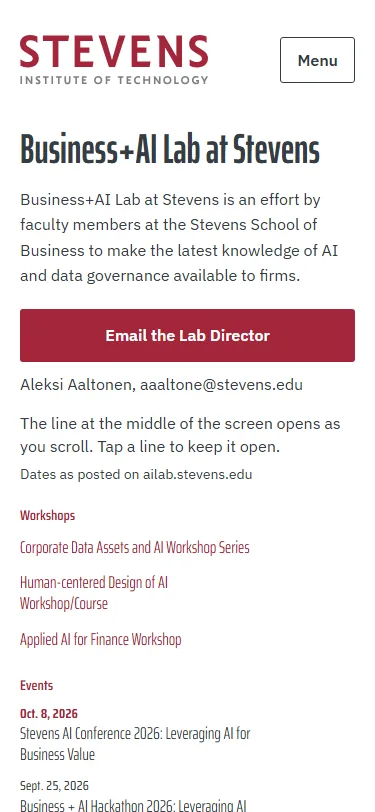
    Sample Z, first screen on a phone: the name, the mission, the Email the Lab Director button, the scroll hint and the start of the list with the workshops in redPhone, first screen

    Open the page for sample Z, Open Index, with motion on

    Judges: idea 5, reader 6, craft 6; 17 of 30, in no judge’s top three.

    Before the review: four lines are too short to reach the right edge and now end early (“Data: The Next Frontier” stops 277 px short at 1440 x 900). It overlaps round 2’s R, so show at most one of the two.

    Fixed after judging: each group rests at one size (the workshops larger, the other three groups alike), so size no longer reads as rank, and the wake after the load eases open and shut with no jump.

    References

    • GitHub, Mona Sans lends a short pointer-distance formula on weight and width.

    • Typographics 2026 lends type fitted to its container and scroll position handed to CSS as one variable.

    Also drawn on: the DEMO festival’s letters that fill fixed cells and take turns growing (ideas-type-demo-festival).

    Steps outside the Stevens brand: each line set at its own width and size so the block is flush on both sides; red and gray lines in one block; the header scrolls away; the headline is smaller against body text than the brand asks at narrower widths.

Ideas from the sweep not built this round

The other seven candidates, with the judges’ main reason and their combined score out of 30 from the candidate round.